15 Amazing Mind Blowing Facts

1. Babies have around 100 more bones than adults

Babies have about 300 bones at birth, with cartilage between many of them. This extra flexibility helps them pass through the birth canal and also allows for rapid growth. With age, many of the bones fuse, leaving 206 bones that make up an average adult skeleton.

2. The Eiffel Tower can be 15 cm taller during the summer

When a substance is heated up, its particles move more and it takes up a larger volume – this is known as thermal expansion. Conversely, a drop in temperature causes it to contract again. The mercury level inside a thermometer, for example, rises and falls as the mercury’s volume changes with the ambient temperature. This effect is most dramatic in gases but occurs in liquids and solids such as iron too. For this reason, large structures such as bridges are built with expansion joints which allow them some leeway to expand and contract without causing any damage.

3. 20% of Earth’s oxygen is produced by the Amazon rainforest

Our atmosphere is made up of roughly 78 per cent nitrogen and 21 per cent oxygen, with various other gases present in small amounts. The vast majority of living organisms on Earth need oxygen to survive, converting it into carbon dioxide as they breathe. Thankfully, plants continually replenish our planet’s oxygen levels through photosynthesis. During this process, carbon dioxide and water are converted into energy, releasing oxygen as a by-product. Covering 5.5 million square kilometres (2.1 million square miles), the Amazon rainforest cycles a significant proportion of the Earth’s oxygen, absorbing large quantities of carbon dioxide at the same time.

4. Some metals are so reactive that they explode on contact with water

There are certain metals – including potassium, sodium, lithium, rubidium and caesium – that are so reactive that they oxidise (or tarnish) instantly when exposed to air. They can even produce explosions when dropped in water! All elements strive to be chemically stable – in other words, to have a full outer electron shell. To achieve this, metals tend to shed electrons. The alkali metals have only one electron on their outer shell, making them ultra-keen to pass on this unwanted passenger to another element via bonding. As a result they form compounds with other elements so readily that they don’t exist independently in nature.

5. A teaspoonful of neutron star would weigh 6 billion tons

A neutron star is the remnants of a massive star that has run out of fuel. The dying star explodes in a supernova while its core collapses in on itself due to gravity, forming a super-dense neutron star. Astronomers measure the mind-bogglingly large masses of stars or galaxies in solar masses, with one solar mass equal to the Sun’s mass (that is, 2 x 1030 kilograms/4.4 x 1030 pounds). Typical neutron stars have a mass of up to three solar masses, which is crammed into a sphere with a radius of approximately ten kilometres (6.2 miles) – resulting in some of the densest matter in the known universe.

6. Hawaii moves 7.5cm closer to Alaska every year

The Earth’s crust is split into gigantic pieces called tectonic plates. These plates are in constant motion, propelled by currents in the Earth’s upper mantle. Hot, less-dense rock rises before cooling and sinking, giving rise to circular convection currents which act like giant conveyor belts, slowly shifting the tectonic plates above them. Hawaii sits in the middle of the Pacific Plate, which is slowly drifting north-west towards the North American Plate, back to Alaska. The plates’ pace is comparable to the speed at which our fingernails grow.

7. Chalk is made from trillions of microscopic plankton fossils

Tiny single-celled algae called coccolithophores have lived in Earth’s oceans for 200 million years. Unlike any other marine plant, they surround themselves with minuscule plates of calcite (coccoliths). Just under 100 million years ago, conditions were just right for coccolithophores to accumulate in a thick layer coating ocean floors in a white ooze. As further sediment built up on top, the pressure compressed the coccoliths to form rock, creating chalk deposits such as the white cliffs of Dover. Coccolithophores are just one of many prehistoric species that have been immortalised in fossil form, but how do we know how old they are? Over time, rock forms in horizontal layers, leaving older rocks at the bottom and younger rocks near the top. By studying the type of rock in which a fossil is found palaeontologists can roughly guess its age. Carbon dating estimates a fossil’s age more precisely, based on the rate of decay of radioactive elements such as carbon-14.

8. In 2.3 billion years it will be too hot for life to exist on Earth

Over the coming hundreds of millions of years, the Sun will continue to get progressively brighter and hotter. In just over 2 billion years, temperatures will be high enough to evaporate our oceans, making life on Earth impossible. Our planet will become a vast desert similar to Mars today. As it expands into a red giant in the following few billion years, scientists predict that the Sun will finally engulf Earth altogether, spelling the definite end for our planet.

9. Polar bears are nearly undetectable by infrared cameras

Thermal cameras detect the heat lost by a subject as infrared, but polar bears are experts at conserving heat. The bears keep warm due to a thick layer of blubber under the skin. Add to this a dense fur coat and they can endure the chilliest Arctic day.

10. It takes 8 minutes, 19 seconds for light to travel from the Sun to the Earth

In space, light travels at 300,000 kilometres (186,000 miles) per second. Even at this breakneck speed, covering the 150 million odd kilometres (93 million miles) between us and the Sun takes considerable time. And eight minutes is still very little compared to the five and a half hours it takes for the Sun’s light to reach Pluto.

11. If you took out all the empty space in our atoms, the human race could fit in the volume of a sugar cube

The atoms that make up the world around us seem solid but are in fact over 99.99999 per cent empty space. An atom consists of a tiny, dense nucleus surrounded by a cloud of electrons, spread over a proportionately vast area. This is because as well as being particles, electrons act like waves. Electrons can only exist where the crests and troughs of these waves add up correctly. And instead of existing in one point, each electron’s location is spread over a range of probabilities – an orbital. They thus occupy a huge amount of space.

12. Stomach acid is strong enough to dissolve stainless steel

Your stomach digests food thanks to highly corrosive hydrochloric acid with a pH of 2 to 3. This acid also attacks your stomach lining, which protects itself by secreting an alkali bicarbonate solution. The lining still needs to be replaced continually, and it entirely renews itself every four days.

13. The Earth is a giant magnet

Earth’s inner core is a sphere of solid iron, surrounded by liquid iron. Variations in temperature and density create currents in this iron, which in turn produce electrical currents. Lined up by the Earth’s spin, these currents combine to create a magnetic field, used by compass needles worldwide.

14. Venus is the only planet to spin clockwise

Our Solar System started off as a swirling cloud of dust and gas which eventually collapsed into a spinning disc with the Sun at its centre. Because of this common origin, all the planets move around the Sun in the same direction and on roughly the same plane. They also all spin in the same direction (counterclockwise if observed from ‘above’) – except Uranus and Venus. Uranus spins on its side, while Venus defiantly spins in the complete opposite direction. The most likely cause of these planetary oddballs are gigantic asteroids which knocked them off course in the distant past.

15. A flea can accelerate faster than the Space Shuttle

A jumping flea reaches dizzying heights of about eight centimetres (three inches) in a millisecond. Acceleration is the change in speed of an object over time, often measured in ‘g’s, with one g equal to the acceleration caused by gravity on Earth (9.8 metres/32.2 feet per square second). Fleas experience 100 g, while the Space Shuttle peaked at around 5 g. The flea’s secret is a stretchy rubber-like protein which allows it to store and release energy like a spring.


Did Scientists Just Break the Record for Highest-Temperature Superconductor? Maybe.

A superconductor lets electricity flow through it perfectly, without losing any of it.

Now, scientists have discovered a superconducting material that works at a possibly record-breaking high temperature, moving a step closer to the goal of achieving such perfection at room temperature.

Make things cold enough, and electrons zip through metals without generating any resistance, heating up, or slowing down. But this phenomenon, known as superconductivity, has historically worked only at extremely cold temperatures that are just a tiny bit above absolute zero. That has made them useless for applications like extremely efficient electric wiring or incredibly fast supercomputers. In the past several decades, scientists have created newer superconducting materials that work at ever higher temperatures. Advertisement

In the new study, a group of researchers inched even closer to their goal by creating a material that is superconductive at minus 9 degrees Fahrenheit (minus 23 degrees Celsius) — one of the highest temperatures ever observed.

The team examined a class of materials called superconducting hydrides that theoretical calculations predicted would be superconducting at higher temperatures. In order to create these materials, they used a small device called a diamond anvil cell that is made up of two small diamonds that compress materials to extremely high pressures. [The Mysterious Physics of 7 Everyday Things]

They placed a tiny — a couple microns long — sample of a soft, whitish metal called lanthanum inside a hole punched into a thin metal foil that was filled with liquid hydrogen. The setup was connected to thin electrical wires. The device squeezed the sample to pressures between 150 and 170 gigapascals, which is over 1.5 million times the pressure at sea level, according to the statement. They then used X-ray beams to examine its structure.

At this high pressure, the lanthanum and hydrogen combine to form lanthanum hydride.

The researchers found that at minus 9 F (minus 23 C), lanthanum hydride demonstrates two out of three properties of superconductivity. The material showed no resistance to electricity and its temperature dropped when a magnetic field was applied. They didn’t observe the third criterion, an ability to expel magnetic fields while cooling, because the sample was too small, according to an accompanying News and Views piece in the same issue of the journal Nature.

“From a scientific standpoint, these results suggest that we might be entering a transition from discovering superconductors by empirical rules, intuition or luck to being guided by concrete theoretical predictions,” James Hamlin, an associate professor of physics at the University of Florida, who was not a part of the study, wrote in the commentary.

Indeed, a group reported similar findings back in January in the journal Physical Review Letters. Those researchers found that lanthanum hydride could be superconductive at an even higher temperature of 44 F (7 C), as long as the sample was taken to higher pressures — around 180 to 200 gigapascals.

But this new group found something very different: At those high pressures, the temperature at which the material displays superconductivity decreases abruptly.

The reason for the discrepancy in the findings is unclear. “In such cases, more experiments, data, independent studies are needed,” senior author Mikhail Eremets, a researcher of high pressure chemistry and physics at the Max Planck Institute for Chemistry in Germany, told Live Science. “Now we can only discuss.”

The team is now planning to try to reduce the pressure and raise the temperature needed to create these superconducting materials, according to the statement. In addition, the researchers are continuing to search for new compounds that could be superconducting at high temperatures.

The Tendency for Order to Emerge from Chaos Was Hidden in the Most Fundamental Equations of Fluid Mechanics

While order often devolves to chaos, sometimes the reverse is true. Turbulent fluid, for example, has a tendency to spontaneously form a tidy pattern: parallel stripes.

Though physicists had observed this phenomenon experimentally, they can now explain why this happens using fundamental fluid dynamics equations, bringing them a step closer to understanding why particles behave in this way. [The Biggest Unsolved Mysteries in Physics]

In the lab, when a fluid is placed in between two parallel plates that are moving in opposite directions from each other, its flow becomes turbulent. But after a little while, the turbulence starts to smooth out in a striped pattern. What results is a canvas of smooth and turbulent lines running at an angle to the flow (imagine slight wind-created waves in a river).Advertisement

“You get structure and clear order out of the chaotic motion of turbulence,” said senior author Tobias Schnieder, an assistant professor in the school of engineering at the Swiss Federal Institute of Technology Lausanne. This “kind of weird and very obscure” behavior has “fascinated scientists for a long, long time.”

Physicist Richard Feynman predicted that the explanation must be hidden in fundamental equations of fluid dynamics, called the Navier-Stokes equations.

But these equations are very difficult to solve and analyze, Schnieder told Live Science. (Showing that the Navier-Stokes equations even have a smooth solution at every point for a 3D fluid is one of the $1 million Millennium Prize problems.) So up until this point, no one knew how the equations predicted this pattern-forming behaviors. Schnieder and his team used a combination of methods, including computer simulations and theoretical calculations to find a set of “very special solutions” to these equations that mathematically describe each step of the transition from chaos to order.

In other words, they broke the chaotic behavior down into its non-chaotic building blocks and found solutions for each small chunk.  “The behavior that we observe is not mysterious physics,” Schnieder said. “It’s somehow hidden in standard equations that describe fluid flow.”

This pattern is important to understand because it shows how the turbulent and the calm, otherwise known as “laminar flow,” compete with each other to determine its final state, according to a statement. When this pattern occurs, the turbulent and laminar flows are equal in strength — with no side winning the tug-of-war.

But this pattern isn’t really seen in natural systems, such as turbulence in the air. Schneider notes that a pattern like this would actually “be pretty bad” for the plane because it would have to fly through a scaffold of bumpy turbulent and not turbulent lines.

Rather, the major goal of this experiment was to understand the fundamental physics of fluids in a controlled environment, he said. Only by understanding the very simple motions of fluids can we begin to understand the more complex systems of turbulence that exist everywhere around us, from the air flow around airplanes to the inside of pipelines, he added.

The researchers published their findings May 23 in the journal Nature Communications.

Black Hole Quiz: Test Your Knowledge of Nature’s Weirdest Creations

Black holes are so bizarre, they sound unreal. Yet astronomers have found good evidence they exist. Test your knowledge of these wacky wonders.

1. The point thought to represent the center of a black hole is known as a:

Ans:- Singularity

2. The Chandrasekhar limit is:

Ans:- The maxiumum mass a white dwarf star can contain without becoming a neutron star or black hole

3. General relativity predicts that black holes have:

Ans:- Infinite density

4. When stars die, they become black holes if they have masses of at least:

Ans:- Three times the mass of the sun

5. Every object has a radius within which its mass, if condensed, would require a gravitational escape speed equal to the speed of light. This radius is called:

Ans:- The Schwarzschild radius

6. The object thought to be a supermassive black hole at the center of the Milky Way galaxy is known as:

Ans:- Sagittarius A*

7. Quasars are distant galaxies whose central regions are thought to contain:

Ans:- A black hole that is both supermassive and active

8. If the sun was spontaneously replaced by a black hole of equal mass, Earth would get sucked in. Is it True/False

Ans:- False

9. The even horizon of a black hole represents:

Ans:- The boundary beyond which nothing can escape

For more updates visit our site sci-fi Daily: Sci-Fi.fashion.blog

This ‘Doomsday Plane’ Can Survive a Nuclear Attack

MACDILL AIR FORCE BASE, Fla. — Air Force One carrying President George W. Bush taxies on the flightline here June 16. The president delivered a speech that was broadcast live to servicemembers worldwide. He said with the transfer of sovereignty two weeks away, the future of a free Iraq is coming into view. (U.S. Air Force photo by Airman 1st Class Jason P. Robertson)

The U.S. Air Force’s E-4B, otherwise known as the “doomsday plane” may be able to withstand the force of a nuclear detonation.

This mostly windowless Boeing 747 was designed during the Cold War, and it indeed looks like a blast from the past, according to CNBC’s Amanda Macias who recently got an inside look at the plane.

The craft is equipped with older analog flight instruments, rather than modern digital technology. The analog equipment is less likely to be fried by the electromagnetic pulse released after a nuclear blast, they reported. It also has shielding to protect its crew from nuclear and thermal effects during a nuclear war. [7 Technologies That Transformed Warfare]Advertisement

With its giant fuel tanks and ability to refuel in the air from other aircraft, the doomsday plane can stay airborne for several days. It holds 67 satellite dishes and antennas, meaning its crew can communicate with anyone, anywhere in the world, even sending messages to the Navy’s ballistic missile submarines, according to DefenseNews.

That being said, most of its capabilities are classified, according to CNBC. The Air Force has four of these E-4B aircraft, each standing at nearly 6 stories tall. Sporting 18 bunks, six bathrooms, a galley and a briefing room among other rooms, each can fly 112 crew members.

Currently, one is being used by Acting Defense Secretary Patrick Shanahan to travel to various parts of the world. On Tuesday morning (May 28), he boarded the craft in Maryland en route to Asia for a weeklong trip.

The Science Times: Albino Panda Spotted in the Wild for the First Time

Pandas are known for their furry black-and-white markings, so wildlife experts were stunned to see an all-white panda with red eyes tramping through a bamboo forest in China last month.

This wild giant panda (Ailuropoda melanoleuca) is the first known albino of its kind.

“Judging from pictures, the panda is an albino, 1 to 2 years old,” Li Sheng, an assistant professor in conservation biology at Peking University who specializes in bears, told China Central Television (CCTV), a Chinese news outlet. [The Pink and White Album: Amazing Albino Animals] Advertisement

Researchers snapped a photo of the rare bear using an infrared camera (a device that makes images that show differences in heat) in the Wolong National Nature Reserve, located in China’s Sichuan province. The photo was taken on April 20, but wildlife officials announced the finding on May 25.

At the time of the impromptu photo shoot, the albino panda was wandering in a bamboo forest about 6,500 feet (2,000 meters) above sea level. It’s one of the nearly 1,900 pandas that live in the wild. Another 300 pandas live in captivity in zoos and breeding centers, according to the Smithsonian National Zoo.

A 2017 study found that pandas likely sport their iconic black-and-white coloring because it helps them hide in the snow and the shadows. The large, dark circles around pandas’ eyes may also help the bears recognize one another, the researchers of that study found.

Little is known about this newly identified, ghostlike panda. Albinism is a condition in which individuals do not have skin, eye or hair pigmentation. In people, albinism can increase the risk of vision problems and skin cancers. In the wild, the recessive disorder, and varying degrees of it, can make it harder for animals to hide from predators.

Luckily, the albino panda didn’t seem to have gotten that memo.

“The panda looked strong, and his steps were steady, a sign that the genetic mutation may not have quite impeded its life,” Li told CCTV.

Other albino animals seen in recent years include an inbred gorilla, a 3-year-old Risso’s dolphin off the coast of California and a zebra at a sanctuary in Hawaii.

Scientists Find Possible Traces of ‘Lost’ Stone Age Settlement Beneath the North Sea

Deep beneath the North Sea, scientists have discovered a fossilized forest that could hold traces of prehistoric early humans who lived there around 10,000 years ago, before the land slipped beneath the waves a few thousand years later.

The discovery gives the researchers new hope in their search for “lost” Middle Stone Age — or Mesolithic — settlements of hunter-gatherers, because the find shows that they have found a particular type of exposed ancient landscape.

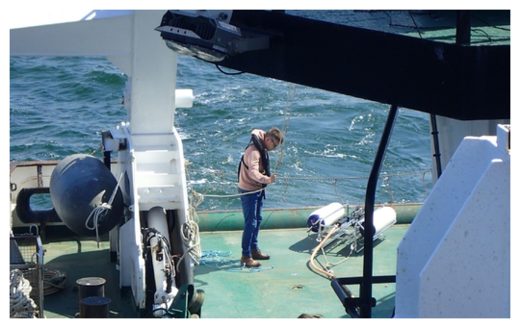
The scientists took sediment samples from the submerged fossilized forest during their 11-day voyage in the North Sea aboard the research ship RV Belgica, in the Doggerland region known as Brown Bank or Brown Ridge. The scientists say they are certain they are close to finding traces of a prehistoric human settlement in the submerged lands. [See Images of a Treasure Trove Found Beneath North Sea]Advertisement

“We are absolutely dead sure that we are very close to a settlement,” said archaeologist Vincent Gaffney of Bradford University in the U.K., one of the project leaders. “The numbers of artifacts historically from that region tell us there is something there.”

“We have now identified the areas where the Mesolithic land surface is close to the surface [of the seafloor],” he said. “So we can use the dredges or grabs to get larger samples of whatever that surface is.”

The scientists now plan to revisit the Brown Bank area on a Dutch research ship in the fall, with heavier dredging equipment that will let them take more samples from the submerged fossilized forest, Gaffney said.

Although the voyage was often plagued by bad weather, the scientists were able to take samples from a submerged Mesolithic landscape, including a fossilized forest.
Although the voyage was often plagued by bad weather, the scientists were able to take samples from a submerged Mesolithic landscape, including a fossilized forest.Credit: Image copyright Dr. Simon Fitch – Europe’s Lost Frontiers Project (University of Bradford)

Beneath the waves

Doggerland once covered thousands of square miles between what is now the east coast of England and the European mainland. It is named after the nearby Dogger Bank, a shallow region frequented in the Middle Ages by Dutch fishing boats called doggers.

The region was exposed as the northern icecap receded at the end of the last Ice Age, about 12,000 years ago, and became a vast, forested plain, populated by herds of animals and communities of early human hunter-gatherers.

But the land became submerged as sea levels continued to rise; Doggerland slipped beneath the North Sea about 8,000 years ago — leaving Britain as a group of islands off of the coast of Europe.

Over the years, the so-called Brown Bank area between England and the Netherlands has given up numerous archaeological finds to fishing boats and dredges, including ancient human bones, flint tools, spear points and even carved-bone artworks.

An area as large as Doggerland would have contained many different human hunter-gatherer groups, totaling thousands of people, Gaffney told Live Science.

The exposed underwater landscape of Brown Bank is the best opportunity for finding any of them, he said.

Thousands of sediment cores were taken from North Sea in the past for different reasons, including offshore wind farms, Gaffney said, but the latest expedition was “a chance to prioritize the finding of human settlements in the center of the North Sea.”

Searching for the Stone Age

During the latest expedition, the researchers used specialized dredges to grab samples from Brown Bank, but the hard petrified wood of the submerged, fossilized forest made that difficult, and heavier dredges will be used the next time that the researchers explore the area by ship. [30 of the World’s Most Valuable Treasures That Are Still Missing]

Some samples had also shown layers of compressed peat just below the seafloor, which indicated former wetlands that may have provided nearly perfect conditions for early human habitation. “The optimum areas are wetlands, where there [area]water, birds, fish and shellfish,” Gaffney said.

The sediment samples from the latest expedition are now being studied; the analysis will take several months, he said. Data from the expedition will also be used to further update archaeological maps of submerged Doggerland, which have been prepared from seismic surveys and sediment samples over several years, Gaffney said.

The existing maps of Doggerland show the now-submerged locations of what once were coastlines, rivers, lakes and wetlands — even a giant saltmarsh. “I is a massive landscape underneath the sea,”the researchers said,

But the maps also show that parts of the submerged lands are completely covered by relatively modern sediments, dumped by some of the largest rivers in Europe, such as the Rhine and the Meuse, Gaffney said.

Areas like Brown Bank were especially important to archaeologists, because the Stone Age landscape there was exposed, or within a few inches of the surface of the seafloor.

The researchers now hope that their future expeditions to Brown Bank yield decisive signs of human settlement there — such as ancient human bones or even human-made artifacts. “We are very close to finding this settlement,” Gaffney said. “It is there, we know it is — we need just that little bit of luck and good weather to get there.”

The team plan to revisit the area aboard a Dutch research ship in the fall, with heavier dredging equipment that will facilitate taking more samples from the submerged landscape, Gaffney said.

Do you Know How our Universe looks like?

NASA researchers have unveiled a new treasure map of the universe, and — thanks to a neutron-star-hunting telescope aboard the International Space Station — X-ray marks the spot.

The new all-sky map, uploaded May 30 to NASA’s website, shows what the cosmos looks like in high-energy X-ray light. X-rays are among the most energetic forms of light in the universe; they’re beamed into space by some of the most extreme objects in the cosmos, including powerful supernova explosions, gas-gobbling neutron stars, and supermassive black holes that suck matter into their maws at near-light-speed.

Humans can’t see these arcing streams of light careening around the cosmos (our sight is limited to the much weaker, visible light chunk of the electromagnetic spectrum), but NASA’s special X-ray observatory aboard the International Space Station can. Known as the Neutron Star Interior Composition Explorer (NICER), the telescope’s primary mission is to study pulsars — fast-spinning, ultra-dense corpses of collapsed stars that pulse with high-energy light as they whirl.Advertisement

Not only do researchers hope to figure out what, exactly, these stellar corpses are made of, but they also want to use them as waypoints that could help future satellites navigate on auto-pilot — sort of like a galactic GPS system, as a NASA statement put it.

While searching the full night sky for the nearest pulsars, NICER has also turned up some other powerful sources of X-ray light, including the afterglow of a relatively recent supernova (seen in the top left corner of this image).

“This image reveals the Cygnus Loop, a supernova remnant about 90 light-years across and thought to be 5,000 to 8,000 years old,” Keith Gendreau, NICER’s principal investigator at the Goddard Space Flight Center in Maryland, said in the statement. “We’re gradually building up a new X-ray image of the whole sky, and it’s possible NICER’s nighttime sweeps will uncover previously unknown sources.”

Indeed, this map represents only the first 22 months of NICER’s orbiting observations (it launched in June 2017), and has likely only scratched the surface of the many stellar mysteries hiding beyond our human sight.

Difference between hypothyroidism and hyperthyroidism

World Thyroid Day is celebrated every year on May 25th across the globe. The significance of this day is to raise awareness about the prevention and treatment of thyroid related disorders. Various campaigns and sessions are conducted in India as well as different parts of the world in order to educate people about the timely diagnosis as well as the significance of inculcating iodized salt in our daily diet.

Disorders related to thyroid are a matter of global health concern and have a substantial impact on the well-being of people, especially pregnant women and children. In developed nations, the prevalence of undiagnosed thyroid disease is decreasing due to widespread awareness and appropriate testing and treatment techniques being readily available.

In India alone, 32 per cent of the population suffers from various thyroid related disorders. People living in north India are more prone to developing hypothyroidism, goitre and other iodine deficiency-related disorders, as the soil in the area is iodine deficit, said Dr Binita Priyambada, Senior Consultant, Medical Team at Docprime.com. Iodine nutrition remains a key determinant of thyroid function worldwide.

What is the thyroid gland?

The thyroid gland is a small gland, located just below Adam’s apple. The gland synthesizes T3 and T4 hormones which are responsible for regulating the body’s metabolism. Any fluctuation in the levels of these hormones may lead to the onset of thyroid related disorders such as hyperthyroidism or hyperthyroidism. Iodine also plays a very significant role in the functioning of the thyroid gland, thus, its deficiency may lead to serious health problems such as goitre, congenital goitre, mental retardation in children, etc.

Thyroid disorders: Hypothyroidism and Hyperthyroidism

Thyroid disorders can be broadly classified into hyperthyroidism and hypothyroidism. Hyperthyroidism refers to a condition in which the thyroid gland produces more than the required amount of secreted hormones. If left untreated, the elevated level of thyroid hormone in the bloodstream may put you at risk of developing thyrotoxic crisis.

Hypothyroidism, on the other hand, refers to a condition in which the thyroid gland is unable to produce the required amount of thyroid hormones. If not diagnosed on time, especially in pregnant women, hypothyroidism may lead to the occurrence of adverse effects such as miscarriage, premature delivery, and preeclampsia. Low levels of thyroid hormones in the body may lead to conditions such as mental retardation in children, goitre, depression, and myxedema.

Who is at greater risk of developing thyroid disorders?

Women are generally more prone to developing this condition than men. Some other factors that increase the risk of occurrence of thyroid related ailments in an individual are –

  • Age greater than 60 years
  • Family history of thyroid problems
  • Pregnant women
  • Predisposition to autoimmune diseases such as celiac disease or type-1 diabetes

Conclusion

Timely diagnosis and proper treatment of thyroid disorders are crucial to preventing the increase in the severity of this condition. In case, a patient experiences symptoms directed towards a thyroid-related disorder, various blood tests may be conducted to evaluate the level of thyroid hormones in the body. Based on the test results, the doctor may recommend an appropriate course of treatment.

This World Thyroid Day, let us all take individual responsibility to act as alert beings and take regular medical checkups to keep a tab on our health.

Why Are Two Stars In Our Galaxy Suddenly Acting Very Strange ??

There’s a binary star system out there in the Milky Way, and it’s acting very weird.

“AG Draconis,” as astronomers call it, is made up of two stars: a relatively cool giant and a relatively hot white dwarf — the stellar corpse of a low- to medium-size star. They’re 16,000 light-years away from Earth. (A light-year is the distance light travels in a year, meaning everything we see happening on these stars happened 16,000 years ago). And that distance makes them difficult to observe in detail. But we do know some things about them.

The two stars are probably interacting, with material flowing off the surface of the big, cool star and onto the surface of the small, hot star. And every once in a while, about once every nine to 15 years dating back to the 1890s, they become active — going through a period of several years where, once a year, they get much brighter in certain wavelengths that Earth’s telescopes can detect. They’re in an active period now, with flashes (or “outbursts” of energy) detected in April 2016, May 2017 and April 2018. (The 2016 outburst was a bit weird itself, having two peaks two weeks apart.) Researchers expect another outburst in April or May of this year, though it’s too soon for any reports to have been published.Advertisement

But there’s something weird about this period of activity, as researchers reported in a paper uploaded May 10 to the preprint server arXiv, which has not yet been through peer review. [15 Amazing Images of Stars]

In the past, AG Draconis’ active periods almost always followed a simple pattern: The first couple of outbursts are “cool,” with the temperature of the white dwarf appearing to drop during each of its outbursts. Then, sometimes, the next set of outbursts are “hot,” with the star’s temperature rising. Cool outbursts tend to be much brighter than hot ones.

Researchers suspect that a cool outburst happens when the white dwarf starts to expand, its outermost, atmosphere-like region growing and cooling at the same time. That doesn’t happen during hot outbursts, which are less well-understood.

But this current cycle is weird. Occurring just seven years after a minor outburst in 2008, it’s been made up entirely of “hot” outbursts.

“Such behavior is considerably peculiar in [the] almost 130-year history of [the] observing of this object,” the researchers wrote, offering no explanation for why it might be happening.

Why does any of this “outbursting” happen at all? No one knows for sure.

The researchers pointed to a paper from 2006 posted to arXiv that offers one popular explanation, derived from a different star system. As the white dwarf’s gravity captures material from its giant twin, an “accretion disk” forms — made up of material circling the dwarf and waiting to fall onto its surface. But the disk is unstable, with the giant sometimes feeding more material into it and sometimes less.

Every once in a while, too much material falls onto the dwarf’s surface and there’s a spike in thermonuclear burning on the outside of the star, where there should be fairly little. That hellish blaze spits material out into the system, forming a brief, hot shell around the white dwarf. From Earth, this all looks like a slight tweak in the light across a few wavelengths.

“The future evolution of AG Dra[conis] is an open question,” the researchers wrote. In 2019, they asked, “can we expect (finally) a major, cool or (again) minor, hot outburst?”

It’s also possible, the researchers suggested, that this period of minor outbursts will simply end. That happened once before, during the relatively minor activity period of 1963 to 1966.

Long term, they said, this illustrates the importance of keeping a careful eye on stars like these, so that astronomers may one day crack the code of their behavior. It also demonstrates the difficulty of parsing events in solar systems light-years away.

RAINBOW

TRY TO REACH THE END OF RAINBOW : SEE IF YOU CAN AND IF NOT TRY TO ANSWER US VIA OUR MAIL R.SAHU.2K17@GMAIL.COM

Rainbows form as sunlight shines on droplets of moisture in the Earth’s atmosphere. The droplets act like prisms, “refracting” or separating light into its component colors and sending them shooting off at a range of angles between 40 and 42 degrees from the direction opposite the sun.

Of course, rainbows are no longer scientifically mysterious. They result from the way light passes through spherical drops: it is first refracted entering each drop’s surface, reflected off the back of the drops, and again refracted as it leaves the drops, with all these rebounds giving it its final angular direction. This explanation has been known since the days of the 17th century physicist Isaac Newton. [Why Can’t We Reach the End of the Rainbow? ]

But imagine how mystical rainbows would have seemed before then! Because they are so beautiful and were so inexplicable they were featured in many early religions. In ancient Greece, for example, rainbows were thought to be the paths made by the messengers of the gods as they traveled between Earth and heaven.

DO YOU KNOW WHAT IS OUR TODAY’s TOPIC OF DISCUSSION: NUTS!!!!!

Perhaps you’ve noticed that, in bowls of mixed nuts, the Brazil nuts always seem to be sitting on top. This is known as the “Brazil nut effect,” and the seemingly mundane phenomenon is actually one of the biggest unsolved mysteries in many-body physics the science that describes large quantities of interacting objects.

Among an assortment of things (whether they be nuts, sedimentary deposits, or other objects of varying sizes), larger pieces rise to the top over time in spite of their greater gravitas, while smaller objects tend to sink lower in the pile over time. Perhaps the small stuff is trickling through cracks. Convection currents may also play a role, as might condensation of smaller particles. All of these possibilities and a few more probably contribute to the Brazil nut effect, but no one knows which ones, or to what extent, so no successful computer simulations of the phenomenon have been made.

Not only nut manufacturers, but also physicists, astronomers and geologists would all benefit from an understanding of the effect, so next time you’re eating nuts or granola, or fishing the crumbs out of the bottom of a bowl of Doritos, try contemplating the physics involved.

Design a site like this with WordPress.com
Get started