Before the 20th century, there were no effective treatments for infections caused by bacteria, including pneumonia, tuberculosis, gonorrhea, rheumatic fever and urinary tract infections. But in 1929, bacteriologist Alexander Fleming discovered the first true antibiotic, penicillin, ushering in a new age of medicine.
Since then, scientists have found dozens of antibiotics, which fight bacteria in a variety of ways.
Many antibiotics, including penicillin, work by attacking the cell wall of bacteria. Specifically, the drugs prevent the bacteria from synthesizing a molecule in the cell wall called peptidoglycan, which provides the wall with the strength it needs to survive in the human body. Advertisement
But there are multiple ways to inhibit the assembly of peptidoglycan — vancomycin, for example, also interferes with peptidoglycan, but not in the same way that penicillin does.
Other antibiotics prevent successful DNA replication in bacteria.
A class of antimicrobials called quinolones targets DNA gyrase, an important enzyme that helps unwind DNA for replication. By removing gyrase from the equation, ciprofloxacin and similar antibiotics effectively prevent the bacteria from multiplying.
Some antibiotics, including tetracycline, which is used to treat acne, respiratory tract infections and other conditions, inhibit protein synthesis. The drugs do this by preventing key molecules from binding to selected sites on cell structures called ribosomes, where protein synthesis occurs. Without its proteins, the bacteria can’t carry out vital functions, including asexual reproduction.
Rifamycin, a group of tuberculosis-fighting antibiotics, achieves a similar effect by inhibiting the synthesis of RNA, a molecule involved in translating the body’s DNA into proteins.
Still other antibiotics fight infections by stopping bacteria from producing folic acid — an essential vitamin — or disputing the structure of a bacterium’s cell membrane, which controls how substances move in and out of the cell.
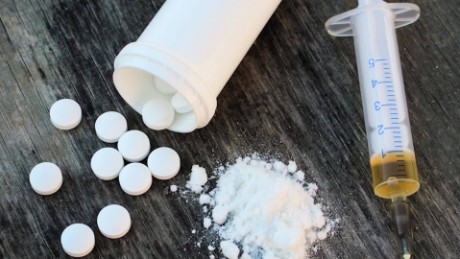
In April, the TV news program “60 Minutes” aired a report about fentanyl, a synthetic opioid much more potent than heroin that’s been implicated in thousands of overdose deaths in the United States. During one segment, Justin Herdman, a U.S. Attorney in Cleveland, wore gloves as he showed journalist Scott Pelley seized bags of fentanyl and carfentanyl (also spelled carfentanil), an even stronger analogue of the drug, in their powder form.
“So if you touch this stuff, it could kill you?” Pelley asked. Herdman replied, yes.
“There’s a reason we have a medic standing by, Scott, and that’s because an overdose is — unfortunately it’s something that we have to be prepared for, even dealing with it in an evidence bag,” Herdman said. [How Does Anesthesia Work?] AdvertisementVolume 0%
Fentanyl is highly potent, but to experts in the medical community, the segment was a misguided claim about the danger of simply being in the same room the drug.
Dr. Ryan Marino, a toxicology fellow who specializes in emergency medicine at the University of Pittsburgh School of Medicine, recently started using the hashtag #WTFentanyl to call out such news stories that promote fentanyl myths.
“I just hope that people can use a little more critical thinking,” Marino told Live Science.
Despite occasional news stories about police officers and other first responders experiencing ill effects or needing Narcan, an opioid antidote, after exposure to fentanyl, Marino said he doesn’t know of any verified medical cases of a first responder testing positive for fentanyl through mere skin contact or being in the vicinity of the drug. And overdosing in such a scenario seems highly unlikely based on what researchers know about fentanyl and other opioids, he said.
In its guide for emergency responders, the American College of Medical Toxicology (ACMT) and American Academy of Clinical Toxicology (AACT) say that for opioid toxicity to occur, “the drug must enter the blood and brain from the environment.” For this to happen, the drug would need to be absorbed by a mucous membrane (such as the nasal passages), inhaled, ingested or delivered by a syringe.
“[B]ased on our current understanding of the absorption of fentanyl and its analogs, it is very unlikely that small, unintentional skin exposures to tablets or powder would cause significant opioid toxicity, and if toxicity were to occur, it would not develop rapidly, allowing time for removal,” the guide says.
Fentanyl also isn’t volatile, meaning it doesn’t readily vaporize or get into the air if undisturbed. In an extreme circumstance in 2002, when Russian authorities used an aerosol suspected to contain carfentanyl and remifentanil — a short-acting synthetic opioid — to subdue hostage-takers of a Moscow theater; more than 100 people were killed due to exposure to this gas. However, the AACT/AACT guide also notes, an “optimized airborne dispersal device is unlikely to be encountered in a local event.”
In a December 2018 article in the health news publication STAT, medical toxicologists Drs. Lewis Nelson and Jeanmarie Perrone, noted that immediately following that 2002 incident, rescuers wearing limited or no protective equipment carried the victims from the theater, but weren’t affected by the opiods. “Passive toxicity makes even less sense in conventional drug-use settings where other individuals are present and unaffected,” Nelson and Perrone wrote.
Marino said he thinks myths about fentanyl risk are harmful in three ways. First, misguided fear over the drug may further stigmatize drug users, and prevent people who overdose from being resuscitated or getting the care they need. There is a genuine opioid crisis, with rising deaths among drug users being attributed to fentanyl; overdose is a time-sensitive condition, and delaying treatment can be fatal.
Second, first responders who start feeling ill at the scene of an overdose or a drug call might not be getting appropriate care and support. “I don’t want to say that the symptoms that they’re having aren’t real,” Marino said, but often “the symptoms do not match up” with overdose and it’s possible that they’re instead experiencing “nocebo” effects (the negative counterpart of the placebo effect) or panic attacks. (The symptoms of opioid toxicity are slowed breathing, decreased consciousness and very small pupils.)
Third, myths about illicit fentanyl might create unnecessary fear about the legitimate uses of the drug. Fentanyl is commonly administered in hospitals to alleviate extreme pain for people with broken bones, for example, Marino said. The drug is handled frequently by pharmacists, surgeons, nurses and anesthesiologists without the negative, passive side-effects that are being reported in these news stories.
In a guide that Marino made for first responders, he wrote that proper precautions, such as wearing gloves and washing any skin exposed to fentanyl with water (not with alcohol-based hand sanitizers, which could increase absorption) can help to protect them from exposure to the drug. If desired, wearing a N95 mask in situations where there is extreme air movement can also reduce the risk of exposure, he said.
A farmer in Russia has uncovered the remains of three elite members of a nomadic tribe from 2,500 years ago. A horse’s skull and harness were found buried alongside one of the individuals.
Three 2,500-year-old burials of elite members of a group known as the Sarmatians have been discovered within a kurgan (a large mound) in a village called Nikolskoye located northwest of the Caspian Sea in Russia.
Though the kurgan had been robbed in ancient times, many artifacts such as weapons, gold jewelry and household items (such as a bronze cauldron) were discovered near the coffins, according to two Russian language statements released by the Astrakhan regional government.
The three burials date back to a time when the Sarmatians flourished in the region. This nomadic group thrived in southern Russia, before moving into eastern and central Europe while fighting wars against other ancient peoples such as the Scythians, Romans and Goths.
Rustam Mudayev discovered the kurgan after noticing a bronze cauldron while working on a farm. Mudayev reported the discovery to authorities, and a team led by Georgiy Stukalov, an archaeologist at the Astrakhan State Museum, excavated the site.
Excavation of the kurgan and analysis of the remains is ongoing. They have yet to determine how the individuals died or their gender and age.
Kurgans have frequently popped up throughout Russia and neighboring countries over the last century; they often contain the burials of elite members of ancient groups.
Archaeological remains from the newly found kurgan are being taken to the Astrakhan State Museum, the statements said.
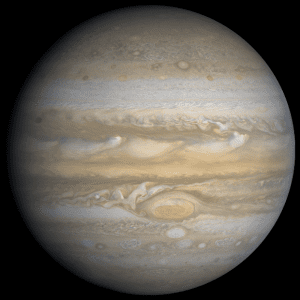
A gas giant, also known as a jovian planet after the planet Jupiter, gaseous giant, or giant planet, is a large planet which has at least ten times the mass of Earth, located in the outer solar system.
Unlike terrestrial planets whose composition is rocky, gas giants have a mostly gaseous composition, such as hydrogen and helium. They do have some rocky material, although this is most often found in the planet core.
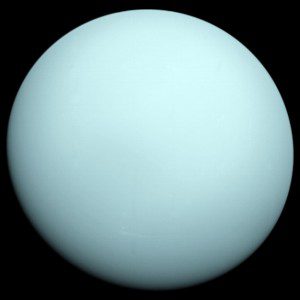
The four gas giants are (in order of distance from the Sun): Jupiter, Saturn, Uranus, and Neptune. Astronomers sometimes categorize Uranus and Neptune as “ice giants” because their composition differs from Jupiter and Saturn. This is because they are mostly composed of water, ammonia, and methane.
RELATIVE DISTANCE OF THE OUTER PLANETS FROM THE SUN
Relative distance between each of the gas giants. From left: Sun, Jupiter, Saturn, Uranus, Neptune
FACTS ABOUT THE GAS GIANTS (OUTER PLANETS)
To find out more about each of the terrestrial planets in our solar system, click one below for facts and information on them.
Filling your plate with ultraprocessed foods really does appear to lead people to eat more and gain weight, according to a new study.
Ultraprocessed foods refers to products that tend to go through a number of manufacturing steps to be produced, and contain ingredients that result from industrial-food manufacturing, such as hydrogenated oils, high-fructose corn syrup, flavoring agents and emulsifiers, according to the study.
For example, an ultraprocessed breakfast meal could consist of a bagel with cream cheese and turkey bacon, while an unprocessed breakfast could contain oatmeal with bananas, walnuts and skim milk.Advertisement
The study, published May 16 in the journal Cell Metabolism, involved 20 healthy volunteers who spent about a month in a laboratory at the National Institutes of Health’s (NIH) Clinical Center in Bethesda, Maryland, where all of their meals were prepared for them. Participants were randomly assigned to a diet of either ultraprocessed or minimally processed foods for two weeks, after which they were switched to the opposite diet for another two weeks. Importantly, meals for both groups had about the same amount of calories, sugars, fiber, fat and carbohydrates; participants could eat as much as they wanted.
The researchers found that, when people were given the ultraprocessed diet, they ate about 500 calories more per day than they did when they were on the unprocessed diet. What’s more, participants gained about 2 pounds (0.9 kilograms) while they were on the ultraprocessed diet; they lost about 2 pounds while on the unprocessed diet. [7 Tips for Moving Toward a More Plant-Based Diet]
Previous studies that involved large groups of people have linked diets high in ultraprocessed foods with health problems, and even a higher risk of early death. But these studies observed people over time, rather than assigning them specific diets, and so could not prove that ultraprocessed foods actually cause people to eat more or gain weight. For example, it might be the case that people who eat ultraprocessed foods develop health problems for other reasons, such as a lack of access to fresh foods.
Although the new study was small, “results from this tightly controlled experiment showed a clear and consistent difference between the two diets,” study lead author Kevin Hall, a senior investigator at NIH’s National Institute of Diabetes and Digestive and Kidney Diseases, said in a statement. “This is the first study to demonstrate causality — that ultraprocessed foods cause people to eat too many calories and gain weight.”
“Limiting consumption of ultraprocessed food may be an effective strategy for obesity prevention and treatment,” the researchers concluded.
The study was not designed to determine why people ate more and gained more weight while on the ultraprocessed diet, so future research should investigate this, the authors said.
Still, the study did find that people tended to eat their meals faster when they were on the ultraprocessed diet, compared with the unprocessed diet. Some previous studies have suggested that faster-eating rates can result in increased overall food intake, the researchers said. The researchers noted that ultraprocessed foods tend to be softer and easier to swallow, which may have led to the faster-eating rate and delayed feelings of fullness, which could have contributed to increased food intake.
“We need to figure out what specific aspect of the ultraprocessed foods affected people’s eating behavior and led them to gain weight,” Hall said.
Future studies could try using different formulations of ultraprocessed foods to see what effect this has on people’s overall consumption and weight gain.
The researchers noted that ultraprocessed foods can be difficult to cut back on, given their convenience and low cost. “We have to be mindful that it takes more time and more money to prepare less-processed foods,” Hall said. “Just telling people to eat healthier may not be effective for some people without improved access to healthy foods.”
A sharp-eyed NASA spacecraft spotted the probable remains of an Israeli spacecraft that crash-landed on the moon last month.
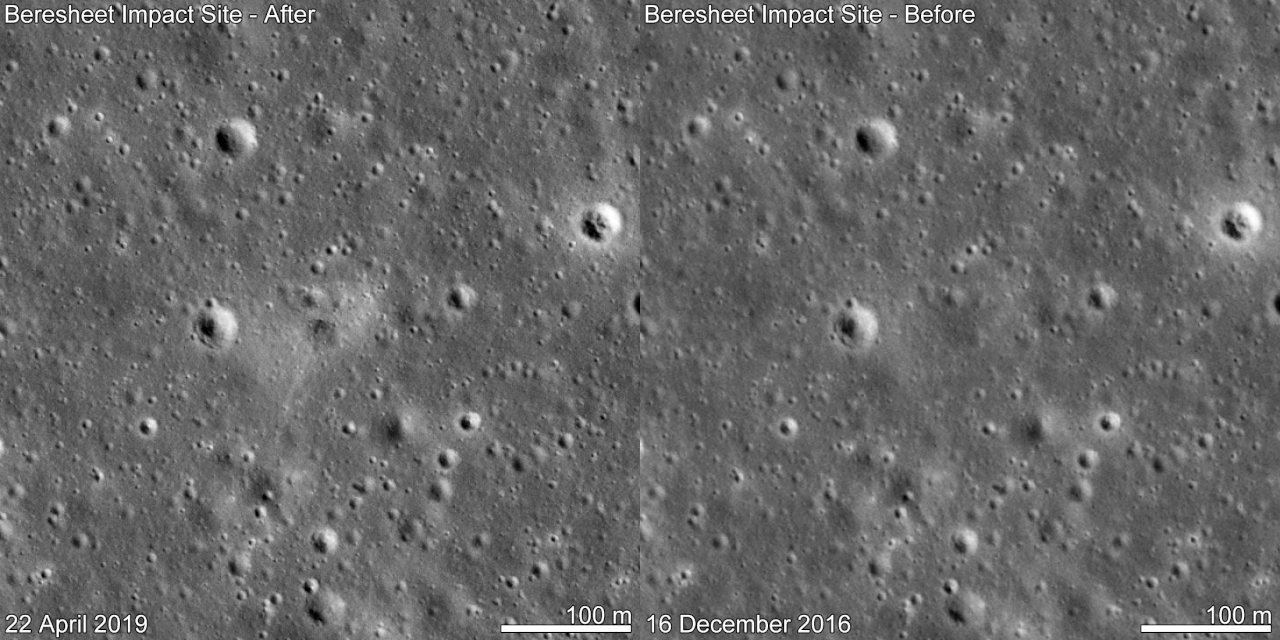
New lunar images show what appears to be the final resting place of the Beresheet lander, a spacecraft managed by nonprofit organization SpaceIL.
Beresheet’s impact site appears as a “white impact halo” in the new image from the Lunar Reconnaissance Orbiter (LRO), NASA officials said in a statement. A white tail is also clearly visible in the image, which NASA said is consistent with Beresheet’s trajectory and approach angle as the spacecraft came down April 11.Advertisement
“The cameras captured a dark smudge, about 10 meters [32 feet] wide, that indicates the point of impact. The dark tone suggests a surface roughened by the hard landing, which is less reflective than a clean, smooth surface,” NASA officials said.
“The light halo around the smudge could have formed from gas associated with the impact or from fine soil particles blown outward during Beresheet’s descent, which smoothed out the soil around the landing site, making it highly reflective,” the agency added.
The mission of Beresheet, the first private lunar lander, came to a sudden end on April 11 during its descent to the lunar surface. LRO’s orbit first brought that spacecraft over the impact site on April 22, and the orbiter captured the image using its black-and-white, narrow-angle cameras.
LRO flew over the site at an altitude of about 56 miles (90 kilometers). From that distance, the spacecraft could not detect any crater. NASA officials said it’s possible the crater was too small for LRO’s cameras or that Beresheet created a small indent instead of a crater.
Beresheet hit the surface at a low angle of approach (8.4 degrees relative to the surface) and with a relatively low velocity and light mass compared to a typical meteoroid (space rock) that slams into the moon’s surface, NASA officials noted. All of these conditions may have added up to a small indent on the surface.
NASA found the site thanks to radio tracking of Beresheet’s descent, which pinpointed the landing site to an uncertainty of only a few miles. Technicians compared new images to 11 “before” images taken of the area and found only one feature that plausibly could have been made by Beresheet. The team also compared the site to craters that were made by other spacecraft that hit the lunar surface, including GRAIL, LADEE and Ranger.
NASA isn’t done with its Beresheet observations yet. Small mirrors were mounted on the top of the spacecraft, so the agency is trying to bounce laser pulses from LRO onto the mirrors. It’s not clear yet if the retroreflector survived the crash.
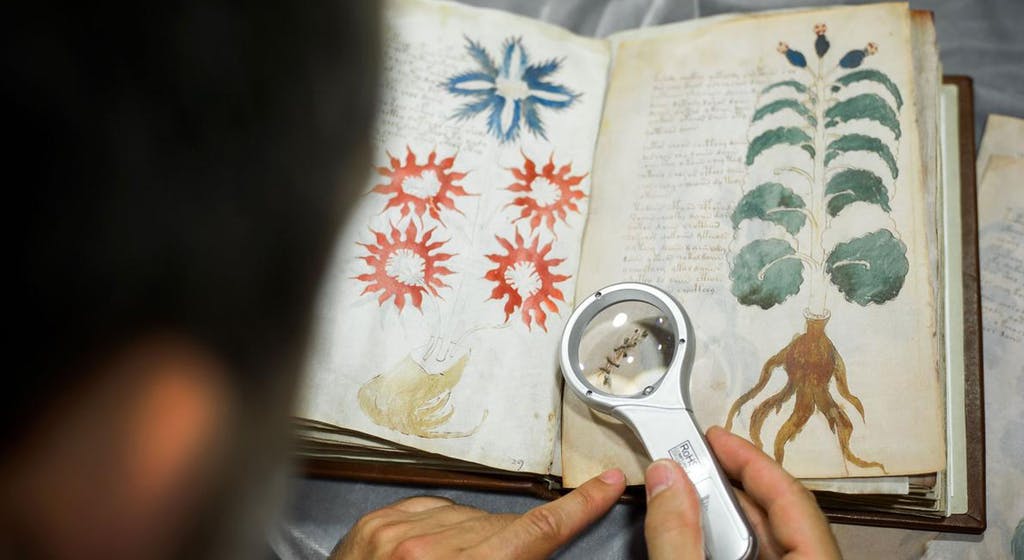
A researcher in England claims he has cracked the code of the mysterious medieval Voynich manuscript — a work full of mystical drawings and indecipherable writing that was first discovered by an antique book dealer in 1912. But other experts are not sold on his claim.
Ever since the discovery, scholars have been trying to decipher the seemingly unrelated jumble of words and symbols printed on its 240 pages of animal-skin parchment. Now, Gerard Cheshire of the University of Bristol in England says that over a span of two weeks, he deciphered the text with a fittingly mysterious “combination of lateral thinking and ingenuity,” according to a statement.
He claims that rather than just a mix of meaningless words and symbols, the manuscript was written in a proto-Romance language that was often used in medieval times, but rarely written in official documents, Cheshire reported April 29 in the journal Romance Studies.Advertisement
Though this Romance language became obsolete long ago, “a significant vestige of the language has survived into the modern era, because its lexicon has been sequestered into the many modern languages of Mediterranean Europe,” he wrote in the paper. [Voynich Manuscript: Images of the Unreadable Medieval Book]
The proto-Romance language used in the manuscript eventually gave rise to Romance languages such as Portuguese, Spanish, French and Italian, he said.
The alphabet of this language contains a combination of unfamiliar and familiar symbols, some words and abbreviations in Latin and no punctuation marks, aside for some marks on individual letters, Chesire explained in the study. What’s more, all the letters are in lower case; there aren’t any double consonants, but there are many double, triple, quadruple and even quintuple strings of vowels.
According to Cheshire, parts of the text reveal that the manuscript was compiled by a Dominican nun as a reference book for Maria of Castile, the Queen of Aragon in 15th-century Spain. According to his code cracking, the manuscript contains information on herbal remedies, therapeutic bathing and astrological readings; and it also talks about reproduction and parenting, among other topics.
But not all scholars are on board with the claim. Gordon Rugg, a researcher at Keele University in the U.K. who has spent decades studying the manuscript, does not think it could be written in a single language.
“If you’re dealing with a text in a real language, you’ll quickly start seeing regularities,” Rugg told Live Science. For example, in English, the word “a” almost always occurs before a consonant and the word “an” before a noun. “Code breakers are well aware of features like this, so this is one of the first things they looked for, and these features don’t occur in the Voynich manuscript,” he added.
Another issue is what’s called “statistical oddities,” he said. For example, words in the first half of a line tend to be longer than words in the second half. “That’s not something you’d expect from a real language.” Rather, it could be a bunch of meaningless text designed to look like a language, he reported in 2016 in the journal Cryptologia. In other words, a medieval hoax.
“Anyone claiming that they’ve found a solution involving a real language would need to explain why the text shows these statistical oddities, rather than simply ignoring them,” he added.
A Chinese mission to the far side of the moon may have unearthed the secrets of the moon’s mantle.
The mission sent a lander to the largest crater in the solar system, where an impact likely sent fragments of the mantle flying to the moon’s surface. The new research may be the best look yet at the second layer of Earth’s natural satellite, which remains largely mysterious. The moon, like Earth, has a crust, mantle and core. The crust is made of plagioclase, or aluminum silicate, but the mantle’s composition has remained mysterious — neither the U.S. Apollo program nor the Soviet Luna missions in the 1960s and 1970s managed to bring back any rock samples containing mantle material.
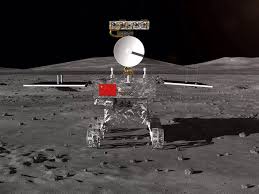
The Chang’E-4 lunar lander, sent to the far side of the moon by China earlier this year, may finally be getting a peek at the mysterious mantle. Some of the first measurements sent back by the lander’s moon rover suggest that the massive South Pole-Aitken crater contains fragments of the moon’s upper mantle. [Top 10 Amazing Moon Facts]
Mystery mantle
The soil tested by the visible and near-infrared spectrometer aboard the Yutu-2 rover shows patterns of light reflectance that indicate high levels of high-calcium pyroxeneand olivine, two minerals found in many igneous and metamorphic rocks and long-hypothesized to make up the moon’s mantle. Olivine, which is abundant in Earth’s mantle, has previously been difficult to find on the lunar surface, though, researchers led by Chunlai Li of the National Astronomical Observatories at the Chinese Academy of Sciences wrote today (May 15) in the journal Nature.
“Li and colleagues’ results are thrilling and could have considerable implications for characterizing the composition of the Moon’s upper mantle,” Patrick Pinet, a planetary scientist at the Research Institute in Astrophysics and Planetology in France, wrote in an opinion piece accompanying the new paper. (Pinet was not involved in the research.)
Planetary scientists suspect that the moon formed when an enormous impact threw huge amounts of material off of the early Earth. In the moon’s early days, the satellite’s entire surface would have been a molten magma ocean. In that ocean, minerals separated out by density, with lighter plagioclase rising to the top and heavier, iron- and magnesium-rich minerals sinking into the mantle.
Understanding this process on the moon is important, Pinet wrote, because the moon has the same three-layer structure as Earth, but without the complications caused by plate tectonics (which Earth has but the moon lacks).
“It is therefore of tremendous value for understanding the evolution of planetary interiors,” Pinet wrote. But without direct evidence of the moon’s mantle composition, that’s a difficult task.
Underneath the surface
China’s Chang’E-4 lander may be changing all that. On January 3, 2019, the lander settled down in the South Pole-Aitken, which is a whopping 1,553 miles (2,500 kilometers) in diameter and is pockmarked with smaller craters. Researchers think that the impact that created the basin was big enough to penetrate deep into the moon’s mantle and spew some of its minerals to the surface.
The first results from the visible and near-infrared spectrometer suggest that the impact did just that. The instrument uses beams of light on the visible and near-infrared part of the spectrum to analyze the minerals in soil, collecting data on the wavelengths of light that reflects off of the material. The results can then be compared to the reflectance of known minerals, to see what matches.
In the Von Kármán crater within the basin, the rover discovered iron- and magnesium-rich rock that had been ejected from the crater upon impact. In addition to low-calcium pyroxene and olivine, the material contained small amounts of high-calcium pyroxene, which is not otherwise found on the moon’s surface.
“These may represent deep-seated materials potentially from the lunar mantle,” the researchers wrote. The ejecta originates from the nearby 45-mile (72-km) diameter Finsen Crater, they found.
More exploration will be needed to validate the results, including the collection of more rock samples, Pinet wrote. Li and colleagues plan to analyze the distribution of the newly discovered olivine and better understand the geology of the possible mantle material.
Have you ever wondered if time travel is possible or not? Yes you have thought but actually it is not possible according to many renowned scientists. Have you heard of the famous experiment by Stephen hawking to prove that travelling back in time is not possible in which he had invited time travellers the next day the event happened,but no one came and Hawking thus proved his thesis.
Still some follow Einstein’s concept of time dilation. According to the theory of relativity, time dilation is a difference in the elapsed time measured by two observers, either due to a velocity difference relative to each other, or by being differently situated relative to a gravitational field. As a result of the nature of spacetime a clock that is moving relative to an observer will be measured to tick slower than a clock that is at rest in the observer’s own frame of reference. A clock that is under the influence of a stronger gravitational field than an observer’s will also be measured to tick slower than the observer’s own clock.
Such time dilation has been repeatedly demonstrated, for instance by small disparities in a pair of atomic clocks after one of them is sent on a space trip, or by clocks on the Space Shuttle running slightly slower than reference clocks on Earth, or clocks on GPS and Galileo satellites running slightly faster. Time dilation has also been the subject of science fiction works, as it technically provides the means for forward time travel.
Thank you for reading my post . If you want more content on time travel then do remember to comment.
Skin rashes are a common complaint during the hot summer months. Perhaps, almost everyone will have some type of rash at some point in their life. They can be caused by a number of things, such as sweating, overheating during the summer months, exposure to sunlight, etc. Sometimes, medications and poor digestion may also lead to rashes and hives. Rashes can be extremely uncomfortable and itchy – yet, we all know not to scratch. But the good thing is that there are many natural home remedies that can help provide relief.
While some rashes may not require treatment and usually clear up on its own, some can be treated at home. However, others might indicate something more serious. If you’re opting for conventional treatment to get rid of rashes, your doctor may prescribe lotions, creams, or antihistamines for relief. Below are a few home remedies that can help treat or soothe red, itchy skin rashes.
Home remedies for skin rashes
Aloe vera: For centuries, the aloe vera plant has been used to treat various problems, including constipation and wound healing. Aloe may offer immense benefits for skin, health, and weight. The plant has been used as an anti-inflammatory, antimicrobial, antiviral, and antioxidant. It is claimed that the clear gel that comes from the aloe leaves can help soothe itchy, irritated skin.
Coconut oil: Often used as a moisturizer on skin and scalp, coconut oil has antiseptic and anti-inflammatory properties. This oil is high in saturated fats and has been used as cooking oil for centuries in tropical countries. You may apply coconut oil, preferably unprocessed virgin coconut oil as it retains its antioxidant and antimicrobial properties, all over the body or just on the itchy areas to get relief. However, make sure that you’re not allergic to coconut oil.
Menthol: Menthol, an essential oil found in plants of the mint family, can help provide relief from pain and itching due to its cooling effect. A 2012 study reported that participants who applied the peppermint-infused oil to areas of itchy skin experienced a significant reduction in itch severity compared to those who used the other product. But, you should dilute essential oils in a carrier oil before using them on your skin.
Apple cider vinegar: Incredibly popular in the natural health community, apple cider vinegar contains acetic acid which has been shown to have good antibacterial activity against various planktonic organisms. In fact, acetic acid has been used for years as a natural wound disinfectant and antiseptic.
To use apple cider vinegar for rashes, dilute the vinegar in water using a 1-to-1 ratio and apply the solution to the scalp. Let it sit for a few minutes, allowing it to dry before washing it off gently with lukewarm water. However, people with cracked and bleeding skin are advised not to use this, because the vinegar can cause a burning sensation on open wounds.
Baking soda:Research suggests that baking soda could be an effective treatment for various fungal skin conditions due to its antifungal properties. According to the NEA, you can one-quarter of a cup of baking soda to a warm bath to help soothe itchy skin. You can also mix baking soda with a little water to form a paste and then apply directly onto itchy areas.







 The Sci-Fi