Volcano caused the biggest mass extinction ever 252 million years ago.
Root ,spire of Paris Notre -Dams destroyed in massive fire.
“Pink Moon” to be visible on April 19 globally.
World’s shortest flight is 53 seconds long.Amazing na!
Scarlet Macaws captured in slow motion.
NASA Tess finds its first earth sized planet.
Small piece of comet found inside 45 billion year old meteorite.
NASA discovers a new star in its two star system “KEPLER -47”.
Jellyfish galaxy swims into view of NASA’s upcoming Webb Telescope
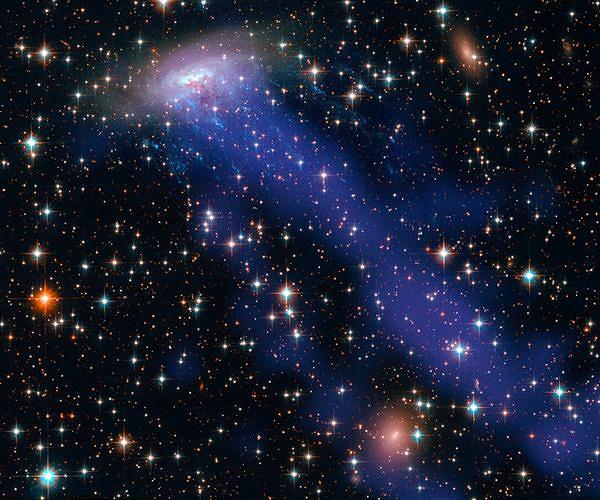
If you look at the galaxy ESO 137-001 in visible light, you can see why it’s considered an example of a “jellyfish” galaxy. Blue ribbons of young stars dangle from the galaxy’s disk like cosmic tentacles. If you look at the galaxy in X-ray light, however, you will find a giant tail of hot gas streaming behind the galaxy. After launch, NASA’s James Webb Space Telescope will study ESO 137-001 to learn how the gas is being removed from the galaxy, and why stars are forming within that gaseous tail.
The newly forming stars in the tail are mysterious because processes common in large groups of galaxies should make it difficult for new stars to emerge. Most galaxies live in groups – for example, the Milky Way is a member of the Local Group, which also contains galaxies like Andromeda and the Triangulum spiral. Some galaxies reside in much larger gatherings of hundreds or even thousands of galaxies known as a galaxy cluster. The “jellyfish” galaxy ESO 137-001 is part of a cluster called Abell 3627.
A galaxy cluster isn’t just galaxies surrounded by empty space. The realm between the galaxies is filled with hot, tenuous gas. For galaxies living in the cluster or a wandering galaxy that gets pulled in by the cluster’s gravity, that gas acts like a headwind. That wind can remove gas and dust from the hapless galaxy in a process known as “ram pressure stripping.”
As a result, ram pressure stripping can slow star formation in the affected galaxy. Galaxies need gas to form stars. Eventually, all galaxies run out of gas and star formation stops. Ram pressure stripping can hasten that end.
This is one reason why galaxies in clusters stop forming new stars sooner than their relatives outside of clusters. But, the mechanisms involved are still mysterious.
“Both gas and dust are getting stripped off, but how much and what happens to the stripped material and the galaxy itself are still open questions,” said Stacey Alberts of the University of Arizona, a co-investigator on the project.
A STAR FORMATION MYSTERY
ESO 137-001 is a spiral galaxy similar in size to the Milky Way, and slightly less massive. Its tail extends across 260,000 light-years of space, almost three times the galaxy’s width. Galactic tails like this are difficult to spot because they are so tenuous. Surprisingly, stars seem to be forming in this tail.
Webb will target sites of star formation at different points along the tail: close to the galaxy, in the middle, and near the end of the tail. Since material at the tail’s end was removed before material close to the galaxy, astronomers can learn how the stripping process changed over time and how that affected conditions to form new stars.
Researchers aren’t sure how stars are able to form at all within the tail since the stripping process should have heated the gas. “We think it’s hard to strip off a molecular cloud that’s already forming stars because it should be tightly bound to the galaxy by gravity. Which means either we’re wrong, or this gas got stripped off and heated up, but then had to cool again so that it could condense and form stars,” explained Alberts.
“Every time we make discoveries on Titan, Titan becomes more and more mysterious,” said Marco Mastrogiuseppe, Cassini radar scientist at Caltech in Pasadena, California. “It is as if you looked down on the Earth’s North Pole and could see that North America had completely different geologic setting for bodies of liquid than Asia does,” added Jonathan Lunine, Director of the Center for Astrophysics and Planetary Science at Cornell University.
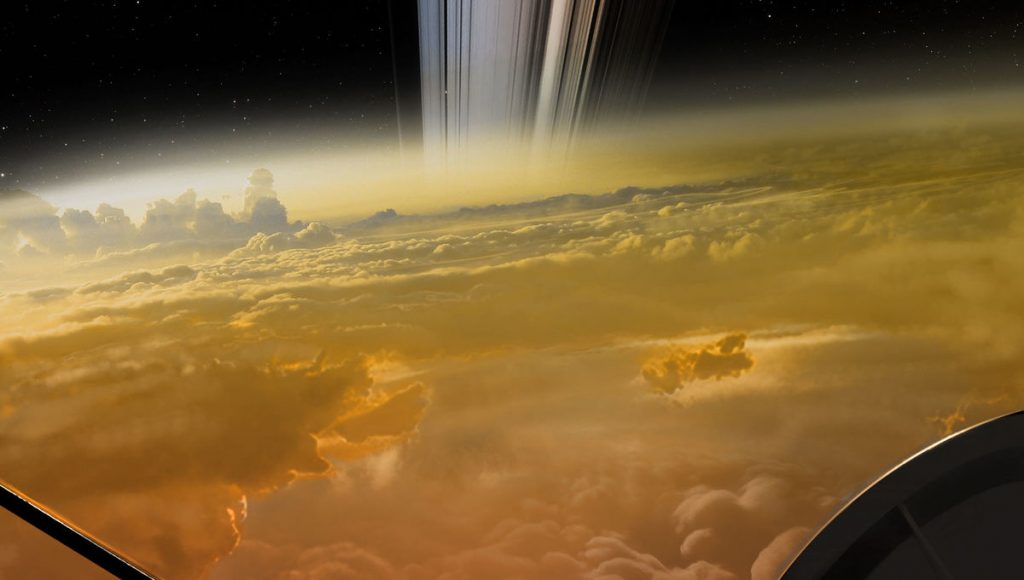
Cassini, which arrived in the Saturn system in 2004 and ended its mission in 2017 by deliberately plunging into Saturn’s atmosphere, mapped more than 620,000 square miles (1.6 million square kilometers) of liquid lakes and seas on Titan’s surface. It did the work with the radar instrument, which sent out radio waves and collected a return signal (or echo) that provided information about the terrain and the liquid bodies’ depth and composition, along with two imaging systems that could penetrate the moon’s thick atmospheric haze.
There are 88 known constellations which are present in the universe.
Hydra is the largest constellation.
Crux is the smallest constellation.
Sirius, which is the brightest star ,is a part of the Canis Major. The Greater Dog is the brightest constellation. Sirius is sometimes called as the Dog Star.
The Sun accounts for 99.86% of the mass in the solar system. It has a mass of around 330,000 times that of Earth. It is three quarters hydrogen and most of its remaining mass is helium.
Over one million Earth’s could fit inside the Sun. If you were to fill a hollow Sun with spherical Earths, somewhere around 960,000 would fit inside. However, if you squashed those Earths to ensure there was no wasted space then you could fit 1,300,000 Earths inside the Sun. The surface area of the Sun is 11,990 times that of Earth.
One day the Sun will consume the Earth. The Sun will continue to burn for about 130 million years after it burns through all of its hydrogen, instead burning helium. During this time it will expand to such a size that it will engulfMercuru, Venus, and Earth. When it reaches this point, it will have become a red giant star.
The energy created by the Sun’s core is nuclear fusion. This huge amount of energy is produced when four hydrogen nuclei are combined into one helium nucleus.
The Sun is almost a perfect sphere.Considering the sheer size of the Sun, there is only a 10 km difference in its polar and equatorial diameters – this makes it the closest thing to a perfect sphere observed in nature.
The Sun is travelling at 220 km per second. It is around 24,000-26,000 light-years from the galactic centre and it takes the Sun approximately 225-250 million years to complete one orbit of the centre of the Milky Way.
The Sun will eventually be about the size of Earth. Once the Sun has completed its red giant phase, it will collapse. It’s huge mass will be retained, but it will have a volume similar to that of Earth. When that happens, it will be known as a white dwarf.
It takes eight minutes for light reach Earth from the Sun. The average distance from the Sun to the Earth is about 150 million km. Light travels at 300,000 km per second so dividing one by the other gives you 500 seconds – eight minutes and twenty seconds. This energy can reach Earth in mere minutes, but it takes millions of years to travel from the Sun’s core to its surface.
The Sun is halfway through its life.At 4.5 billion years old, the Sun has burned off around half of its hydrogen stores and has enough left to continue burning hydrogen for another 5 billion years. Currently the Sun is a yellow dwarf star.
The distance between Earth and Sun changes. This is because the Earth travels on a elliptical orbit path around the Sun. The distance between the two ranges from 147 to 152 million km. This distance between them is one Astronomical Unit (AU).
The Sun rotates in the opposite direction to Earth with the Sun rotating from west to east instead of east to west like Earth.
The Sun rotates more quickly at its equator than it does close to its poles. This is known as differential rotation.
The Sun has a powerful magnetic field. When magnetic energy is released by the Sun during magnetic storms, solar flares occur which we see on Earth as sunspots. Sunspots are dark areas on the Sun’s surface caused by magnetic variations. The reason they appear dark is due to their temperature being much lower than surrounding areas.
Temperatures inside the Sun can reach 15 million degrees Celsius.Energy is generated through nuclear fusion in the Sun’s core – this is when hydrogen converts to helium – and because objects generally expand, the Sun would explode like an enormous bomb if it wasn’t for it’s tremendous gravitational pull.
The Sun generates solar winds.These are ejections of plasma (extremely hot charged particles) that originate in the layer of the Sun know as the corona and they can travel through the solar system at up to 450 km per second.
The atmosphere of the Sun is composed of three layers: the photosphere, the chromosphere, and the corona.
The Sun is classified as a yellow dwarf star. It is a main sequence star with surface temperatures between 5,000 and 5,700 degrees celsius (9,000 and 10,300 degrees fahrenheit).
The Aurora Borealis and Aurora Australis are caused by the interaction of solar winds with Earth’s atmosphere
Ever since the discovery of the Neanderthal fossils, expert opinion has been divided as to whether Neanderthals should be considered a separate species (Homo neanderthalensis) or a subspecies (Homo sapiens neanderthalensis) relative to modern humans.[32][33][34]Pääbo (2014) described such “taxonomic wars” as unresolveable in principle, “since there is no definition of species perfectly describing the case.”[5] The question depends on the definition of Homo sapiens as a chronospecies, which has also been in flux throughout the 20th century. Authorities preferring classification of Neanderthals as subspecies have introduced the subspecies name Homo sapiens sapiens for the anatomically modern Cro-Magnonpopulation which lived in Europe at the same time as Neanderthals, while authorities preferring classification as separate species use Homo sapiens as equivalent to “anatomically modern humans”.
During the early 20th century, a prevailing view of Neanderthals as “simian”, influenced by Arthur Keith and Marcellin Boule,[35] tended to exaggerate the anatomical differences between Neanderthals and Cro Magnon. Beginning in the 1930s, revised reconstructions of Neanderthals increasingly emphasized the similarity rather than differences from modern humans. From the 1940s throughout the 1970s, it was increasingly common to use the subspecies classification of Homo sapiens neanderthalensis vs. Homo sapiens sapiens.[36] The hypothesis of “multiregional origin” of modern man was formulated in the 1980s on such grounds, arguing for the presence of an unbroken succession of fossil sites in both Europe and Asia.[37]Hybridization between Neanderthals and Cro Magnon had been suggested on skeletal and craniological grounds since the early 20th century, and found increasing support in the later 20th century,[38] until Neanderthal admixture was found to be present in modern populations genetics in the 2010s.
Both Neanderthals and anatomically modern humans were initially thought to have evolved from Homo erectus between 300,000 and 200,000 years ago.H. erectus had emerged around 1.8 million years ago, and had long been present, in various subspecies throughout Eurasia.
The divergence time between the Neanderthal and archaic Homo sapienslineages is estimated to be between 800,000 and 400,000 years ago. The more recent time depth has been suggested by Endicott et al. (2010)[39] and Rieux et al. (2014).[40]
The time of divergence between archaic Homo sapiens and ancestors of Neanderthals and Denisovans caused by a population bottleneck of the latter was dated at 744,000 years ago, combined with repeated early admixture events and Denisovans diverging from Neanderthals 300 generations after their split from Homo sapiens, was calculated by Rogers et al. (2017).[41][42]
Homo heidelbergensis, dated 600,000 to 300,000 years ago, has long been thought to be a likely candidate for the last common ancestor of the Neanderthal and modern human lineages. However, genetic evidence from the Sima de los Huesos fossils published in 2016 seems to suggest that H. heidelbergensis in its entirety should be included in the Neanderthal lineage, as “pre-Neanderthal” or “early Neanderthal”, while the divergence time between the Neanderthal and modern lineages has been pushed back to before the emergence of H. heidelbergensis, to about 600,000 to 800,000 years ago, the approximate age of Homo antecessor.[43]
The taxonomic distinctions between H. heidelbergensis and Neanderthals is mostly due to a fossil gap in Europe between 300,000 and 243,000 years ago (MIS 8). “Neanderthals”, by conventions, are fossils which date to after this gap.[44][45] The quality of the fossil record greatly increases from 130,000 years ago onwards.[46] Specimens younger than this date make up the bulk of known Neanderthal skeletons and were the first whose anatomy was comprehensively studied.[47][48] In morphological studies, the term “classic Neanderthal” may be used in a narrower sense for Neanderthals younger than 71,000 years old (MIS 4 and 3).[44]
Microbiome
Neanderthals lived along-side humans until their extinction between 40,000-30,000 years ago[49], and share a common ancestor which could tell us more about how our microbiome evolved[50]. Using dental calculus, calcified bone that traps microorganism, researchers have been able to look into how ancient human microbiomes may have existed[51]. Based on a 16s shotgun sequence of dental calculus found in neanderthal specimens, researchers have found a large portion of neanderthal oral microbiome contains Actinobacteria, Firmicutes, Bacteroidetes, Proteobacteria, much like modern humans; however, neanderthals also had, Euryarchaeota, fungi and some oral pathogens that modern humans lack[50].
Diet of neanderthals depend on the environment they live in. Neanderthal remains recovered from Spy Cave, Belgium and examined them using dental calculus which indicated neanderthals in this area had meat based diet, including woolly rhinoceros and wild sheep[50]. This is compared to neanderthal remains found in Spain. In El Sidrón Cave, Spain, they examined remains indicating a large amount of plant material such as nuts and moss, as well as mushrooms[50]. Researchers determined that the difference in diets contributed to the neanderthal microbiota, and meat based diet caused the most variation[50]. According to fecal biomarkers, neanderthals were able to convert cholesterol to coprostanol at a high rate, much like modern humans, because of the bacteria present in their gut[52].
Approximate Neanderthal range; pre-Neanderthal and early Neanderthal range shown in purple, late Neanderthal range in blue.
Sites where “classic Neanderthal” fossils (70–40 ka) have been found. Ice sheets of the last glacial maximum are indicated (partly ice-free during the Eemian interglacial)
Early Neanderthals, living before the Eemian interglacial (130 ka), are poorly known and come mostly from European sites. From 130 ka onwards, the quality of the fossil record increases dramatically. From then on, Neanderthal remains are found in Western, Central, Eastern, and Mediterranean Europe,[53] as well as Southwest, Central, and Northern Asia up to the Altai Mountains in Siberia. No Neanderthal has ever been found outside Central to Western Eurasia, namely neither to the south of 30°N (Shuqba, Levant), nor east of 85°E (Denisova, Siberia).
The limit of their northern range appears to have been south of 53°N (Bontnewydd, Wales),[54] although it is difficult to assess because glacial advances destroy most human remains, the Bontnewydd tooth being exceptional. Middle Palaeolithic artefacts have been found up to 60°N on the Russian plains.[55]
Total Neanderthal effective population size has been estimated at close to 15,000 individuals (corresponding to a total population of roughly 150,000 individuals), living in small, isolated, inbred groups.[56]
Comparison of faces of early European Homo sapiens (left) and Homo neanderthalensis (right) based on forensic facial reconstructions exhibited at the Neanderthal Museum.
Neanderthal anatomy differed from modern humans in that they had a more robust build and distinctive morphological features, especially on the cranium, which gradually accumulated more derived aspects as it was described by Marcellin Boule,[57]particularly in certain isolated geographic regions. These include shorter limb proportions, a wider, barrel-shaped rib cage, a reduced chin, sloping forehead, and a large nose, being at the modern human higher end in both width and length,[b] and started somewhat higher on the face than in modern humans. The Neanderthal skull is typically more elongated and less globular than that of anatomically modern humans, and features a notable occipital bun.[45] Inherited Neanderthal DNA variants may subtly influence the skull shape of living people.[58]
Neanderthals were much stronger than modern humans, with particularly strong arms and hands, while they were comparable in height; based on 45 long bones from 14 males and 7 females, three different methods of estimating height produced averages for Neanderthal males from 164 to 168 cm (65 to 66 in) and 152 to 156 cm (60 to 61 in) for females.[13] Samples of 26 specimens found an average weight of 77.6 kg (171 lb) for males and 66.4 kg (146 lb) for females.[59]
Neanderthals are known for their large cranial capacity, which at 1,600 cm3 (98 cu in) is larger on average than that of modern humans. One study has found that drainage of the dural venous sinuses (low pressure blood vessels that run between the meninges and skull leading down through the skull) in the occipital lobe region of Neanderthal brains appears more asymmetric than other hominid brains.[60] Three-dimensional computer-assisted reconstructions of Neanderthal infants based on fossils from Russia and Syria indicated that Neanderthal and modern human brains were the same size at birth, but that by adulthood, the Neanderthal brain was larger than the modern human brain.[61] They had almost the same degree of encephalisation (i.e. brain-to-body-size ratio) as modern humans.[62][63]
Three-dimensional reconstructions of nasal cavities and computational fluid dynamics techniques have found that Neanderthals and modern humans both adapted their noses (independently and in a convergent way) to help breathe in cold and dry conditions.[64] The large nose seen in Neanderthals, as well as Homo heidelbergensis, affected the shape of the skull and the muscle attachments, and gave them a weaker bite force than in modern humans.[65] Larger eye sockets and larger areas of the brain devoted to vision suggest that their eyesight may have been better than that of modern humans.[66] Dental remains from two Italian sites indicate that Neanderthal dental features had evolved by around 450,000 years ago during the Middle Pleistocene epoch.[67]
Two Neanderthal specimens from Italy and Spain were found to have an allele of the melanocortin 1 receptor (MC1R) with reduced activity. This receptor plays a role in mammalian pigmentation, and the activity of the novel allele in Neanderthals was found to be reduced sufficiently to allow for visibly lighter pigment expression, producing physical traits such as red hair or blond hair and light skin tone.[68] This allele was not found in the Croatian or Altai Neanderthal specimens subjected to whole-genome sequencing, nor have MC1R variants known to cause red hair in modern humans, though the Altai specimen was polymorphic for another variant MC1R allele of unknown effect.[69] Genomic analysis of three Croatian specimens for the alleles of numerous genes that affect pigment in modern humans showed the Neanderthals to have more dark-pigment-producing alleles than those producing reduced pigmentation. Based on this they concluded these Neanderthals had darker hair, skin and eye coloration than modern Europeans. The universality of this conclusion was questioned, given the likely population diversity of Neanderthals across their range, potential differences in pigmentation regulation in Neanderthals versus modern humans, and the study’s use of a simple numerical determination of whether there were more dark- or light-pigment alleles, when some pigmentation genes are known to override the effects of others.[70]
The overall shorter limbs and in general more stout body proportions of Neanderthals may have been an adaptation to colder climates. In comparison to modern humans, Neanderthals were more suited for sprinting and pouncing activities rather than endurance running, which would have been adaptive in the forests and woodlands that seem to have been their preferred environment. Genomic evidence possibly points to a higher proportion of fast-twitch muscle fiber in the Neanderthal.[71]Evidence suggests that Neanderthals walked upright much like modern humans.[72][73]
Neanderthals made stone tools, used fire,[74] and were hunters. This is the extent of the consensus on their behaviour. It had long been debated whether Neanderthals were hunters or scavengers,[45] but the discovery of the pre-Neanderthal Schöningen wooden spears in Germany helped settle the debate in favour of hunting. A Levallois pointembedded in the vertebrae of a wild ass indicated that a javelin had been thrown with a parabolic trajectory to disable the animal.[75] Most available evidence suggests they were apex predators,[76] and fed on red deer, reindeer, ibex, wild boar, aurochs and on occasion mammoth, straight-tusked elephant and rhinoceros.[45][77][78][79] They appear to have occasionally used vegetables as fall-back food,[80] revealed by isotope analysis of their teeth and study of their coprolites (fossilised faeces).[78] Dental analysis of specimens from Spy, Belgium and El Sidrón, Spain[81] suggested that these Neanderthals had a wide-ranging diet, with no evidence at all that the El Sidrón Neanderthals were carnivorous, instead living on “a mixture of forest moss, pine nuts and a mushroom known as split gill“.[82] Nonetheless, isotope studies of Neanderthals from two French sites showed similar profiles to other carnivores, suggesting that these populations may have eaten meat.[83][84][85] The Neanderthal skeleton suggests they consumed 100 to 350 kcal (420 to 1,460 kJ) more per day than modern male humans of 68.5 kg (151 lb) and females of 59.2 kg (131 lb).[59]
The size and distribution of Neanderthal sites, along with genetic evidence, suggests Neanderthals lived in much smaller and more sparsely distributed groups than anatomically-modern Homo sapiens.[86][87] The bones of twelve Neanderthals were discovered at El Sidrón cave in northwestern Spain. They are thought to have been a group killed and butchered about 50,000 years ago. Analysis of the mtDNA showed that the three adult males belonged to the same maternal lineage, while the three adult females belonged to different ones. This suggests a social structure where males remained in the same social group and females “married out”.[88]
The bones of the El Sidrón group show signs of defleshing, suggesting that they were victims of cannibalism.[88] The St. Césaire 1 skeleton from La Roche à Pierrot, France, showed a healed fracture on top of the skull apparently caused by a deep blade wound, suggesting interpersonal violence.[89] Shanidar 3, an adult male dated to the late middle Paleolithic, was found to have a rib lesion characteristic of projectile weapon injuries, which some anthropologists consider evidence for interspecies conflict.[90]
Neanderthals suffered a high rate of traumatic injury, with by some estimates 79% of specimens showing evidence of healed major trauma.[91] It was thus theorized that Neanderthals employed a riskier and possibly less sophisticated hunting strategy. However, rates of cranial trauma are not significantly different between Neanderthal and middle paleolithic Anatomically Modern Human samples.[92] Both populations evidently cared for the injured and had some degree of medical knowledge.
Claims that Neanderthals deliberately buried their dead, and if they did, whether such burials had any symbolic meaning,[46]:158–60 are heavily contested.[93][94][95] The debate on deliberate Neanderthal burials has been active since the 1908 discovery of the well-preserved Chapelle-aux-Saints 1 skeleton in a small hole in a cave in southwestern France. In this controversy’s most recent installment, a team of French researchers reinvestigated the Chapelle-aux-Saints cave and in January 2014 reasserted the century-old claim that the 1908 Neanderthal specimen had been deliberately buried,[96] and this has in turn been heavily criticised.[97]
Neanderthal sites show no evidence of tools for making tailored clothing. There are only hide scrapers, which might have been used to make blankets or ponchos. This is in contrast to Upper Paleolithic (modern human) sites, which have an abundance of eyed bone needles and bone awls. Moreover, microwear analysis of Neanderthal hide scrapers shows that they were used only for the initial phases of hide preparation, and not for the more advanced phases of clothing production.— John F. Hoffecker, The Spread of Modern Humans in Europe
Culture
Whether Neanderthals created art and used adornments, which would indicate a capability for complex symbolic thought, remains unresolved. A 2010 paper on radiocarbon dates cast doubt on the association of Châtelperronian beads with Neanderthals,[99] and Paul Mellars considered the evidence for symbolic behaviour to have been refuted.[100] This conclusion, however, is controversial, and others such as Jean-Jacques Hublin and colleagues have re-dated material associated with the Châtelperronian artifacts[101] and used proteomic evidence to restate the challenged association with Neanderthals.[102]
Artist’s reconstruction of a Neanderthal man with child
A large number of other claims of Neanderthal art, adornment, and structures have been made. These are often taken by the media as showing Neanderthals were capable of symbolic thought,[103][104] or were “mental equals” to anatomically modern humans.[105][106] As evidence of symbolism, none of them are widely accepted,[107]although the same is true for Middle Palaeolithic anatomically modern humans. Among many others:
Flower pollen on the body of pre-Neanderthal Shanidar 4, Iraq, had in 1975 been argued to be a flower burial.[108] Once popular, this theory is no longer accepted.[109][110]
Bird bones were argued to show evidence for feather plucking in a 2012 study examining 1,699 ancient sites across Eurasia, which the authors controversially[111] took to mean Neanderthals wore bird feathers as personal adornments.[112]
Deep scratches were found in 2012 on a cave floor underlying Neanderthal layer in Gorham’s Cave, Gibraltar, which some have controversially[113] interpreted as art.[114]
Two 176,000-year-old stalagmite ring structures, several metres wide, were reported in 2016 more than 300 metres from the entrance within Bruniquel Cave, France. The authors claim artificial lighting would have been required as this part of the cave is beyond the reach of daylight and that the structures had been made by early Neanderthals, the only humans in Europe at this time.[115]
In 2015, a study argued that a number of 130,000-year-old eagle talons found in a cache near Krapina, Croatia along with Neanderthal bones, had been modified to be used as jewellery.[116][117]
All of these appeared only in single locations. Yet in 2018, using uranium-thorium dating methods,[118] red painted symbols comprising a scalariform (ladder shape), a negative hand stencil, and red lines and dots on the cave walls of three Spanish caves 700 km (430 mi) apart were dated to at least 64,000 years old.[119] If the dating is correct, they were painted before the time anatomically modern humans are thought to have arrived in Europe. Paleoanthropologist John D. Hawks argues these findings demonstrate Neanderthals were capable of symbolic behaviour previously thought to be unique to modern humans.[120]
An alternative to extinction is that Neanderthals were absorbed into the Cro-Magnon population by interbreeding. This would be counter to strict versions of the recent African origin theory, since it would imply that at least part of the genome of Europeans would descend from Neanderthals.
Pre-2010 interbreeding hypotheses
Until the early 1950s, most scholars thought Neanderthals were not in the ancestry of living humans.[122]:232–34[123] Nevertheless, Thomas H. Huxley in 1904 saw among Frisians the presence of what he suspected to be Neanderthaloid skeletal and cranial characteristics as an evolutionary development from Neanderthal rather than as a result of interbreeding, saying that “the blond long-heads may exhibit one of the lines of evolution of the men of the Neanderthaloid type,” yet he raised the possibility that the Frisians alternatively “may be the result of the admixture of the blond long-heads with Neanderthal men,” thus separating “blond” from “Neanderthaloid.”[124]
Hans Peder Steensby proposed interbreeding in 1907 in the article Race studies in Denmark. He strongly emphasised that all living humans are of mixed origins.[125] He held that this would best fit observations, and challenged the widespread idea that Neanderthals were ape-like or inferior. Basing his argument primarily on cranial data, he noted that the Danes, like the Frisians and the Dutch, exhibit some Neanderthaloid characteristics, and felt it was reasonable to “assume something was inherited” and that Neanderthals “are among our ancestors.”
Carleton Stevens Coon in 1962 found it likely, based upon evidence from cranial data and material culture, that Neanderthal and Upper Paleolithic peoples either interbred or that the newcomers reworked Neanderthal implements “into their own kind of tools.”[126] Christopher Thomas Cairney in 1989 went further, laying out a rationale for hybridisation and adding a broader discussion of physical characteristics as well as commentary on interbreeding and its importance to adaptive European phenotypes. Cairney specifically discussed the “intermixture of racial elements” and “hybridisation.”[38]
By the early 2000s, the majority of scholars supported the Out of Africa hypothesis,[127][128] according to which anatomically modern humans left Africa about 50,000 years ago and replaced Neanderthals with little or no interbreeding. Yet some scholars still argued for hybridisation with Neanderthals. The most vocal proponent of the hybridisation hypothesis was Erik Trinkaus of Washington University.[129] Trinkaus claimed various fossils as products of hybridised populations, including the skeleton of a child found at Lagar Velho in Portugal[130][131][132] and the Peștera Muierii skeletons from Romania.[133]
In 2010, geneticists announced that interbreeding had likely taken place,[134][135] a result confirmed in 2012.[136][137][138][page needed] The genomes of all non-Africans include portions that are of Neanderthal origin,[139][140] a share estimated in 2014 to 1.5–2.1%.[141] This DNA is absent in Sub-Saharan Africans (Yoruba people and San subjects).[134]Ötzi the iceman, Europe’s oldest preserved mummy, was found to possess an even higher percentage of Neanderthal ancestry.[142] The two percent of Neanderthal DNA in Europeans and Asians is not the same in all Europeans and Asians: in all, approximately 20% of the Neanderthal genome appears to survive in the modern human gene pool.[143]
Genomic studies suggest that modern humans mated with at least two groups of archaic humans: Neanderthals and Denisovans.[144] Some researchers suggest admixture of 3.4–7.9% in modern humans of non-African ancestry, rejecting the hypothesis of ancestral population structure.[145] Detractors have argued and continue to argue that the signal of Neanderthal interbreeding may be due to ancient African substructure, meaning that the similarity is only a remnant of a common ancestor of both Neanderthals and modern humans and not the result of interbreeding.[146][147]John D. Hawks has argued that the genetic similarity to Neanderthals may indeed be the result of both structure and interbreeding, as opposed to just one or the other.[148]
An approximately 40,000 year old anatomically-modern human skeleton from Peștera cu Oase, Romania, was found in 2015 to have a much larger proportion of DNA matching the Neanderthal genome than seen in humans of today, and this was estimated to have resulted from an interbreeding event as few as four generations earlier. However, this hybrid Romania population does not appear to have made a substantial contribution to the genomes of later Europeans.[149][150]
While some modern human nuclear DNA has been linked to the extinct Neanderthals, no mitochondrial DNA of Neanderthal origin has been detected,[19] which in primates is almost always maternally transmitted.[151] This observation has prompted the hypothesis that whereas female humans interbreeding with male Neanderthals were able to generate fertile offspring, the progeny of female Neanderthals who mated with male humans were either rare, absent or sterile.[152]
However, Eastern Neanderthals derive significant portions of their ancestry from an earlier dispersal of modern humans unrelated to the one that gave rise to Eurasians today.[18] It is estimated that they split off shortly after the Khoisan divergence some 200 kya. Such unidirectional flow is significant given the current scenario of no Eurasian admixture in Western European Neanderthals. This is not contradictory to the Out-of-Africa model, which claims a single-dispersal to give rise to all Eurasians today. A signal of an early dispersal is present in the genome of New Guineans, who derive up to 2% of their ancestry from this group that apparently diverged from other Africans 120 kya.[153] However, it is noted that the Denisovans do not carry this early human dispersal signal. Pagani et al. therefore argue that the admixture between this early modern human group, modern Eurasians, and Neanderthals took place in Southern Arabia or the Levant and that the latter group consisted of migrants from the Middle East into Siberia.
Interbreeding with Denisovans
Sequencing of the genome of a Denisovan, a distinct but related archaic hominin, from the Denisova cave in the Siberian Altai region has shown that 17% of its genome represents Neanderthal DNA.[154] Unsurprisingly, the genome from a 120,000 year old Neanderthal bone found in the same cave more closely resembled the Neanderthal DNA present in the Denisovan genome than that of Neanderthals from the Vindija cave in Croatia or the Mezmaiskaya cave in the Caucasus, suggesting that the gene flow came from a local interbreeding.[155] However, the complete genome sequencing of DNA from a 90,000 year old bone fragment, Denisova 11, showed it to have belonged to a Denisovan-Neanderthal hybrid, whose father was a typical Denisovan with the Altai Neanderthal component dating to an interbreeding more than 300 generations earlier, but the specimen’s mother was a Neanderthal belonging to a population more closely related to the Vindija Neanderthal than to the sequenced Altai Neanderthal genome. This suggests mobility or turnover among the distinct Neanderthal populations.[156][157][158][159]
According to a 2014 study by Thomas Higham and colleagues of organic samples from European sites, Neanderthals died out in Europe between 41,000 and 39,000 years ago.[d] New dating in Iberia, where Neanderthal dates as late as 24,000 years had been reported before, now suggests evidence of Neanderthal survival in the peninsula after 42,000 years ago is almost non-existent.[8]
Anatomically modern humans arrived in Mediterranean Europe between 45,000 and 43,000 years ago, so the two different human populations shared Europe for several thousand years.[6][160] The exact nature of biological and cultural interaction between Neanderthals and other human groups is contested.[161]
Possible scenarios for the extinction of the Neanderthals are:
Neanderthals were a separate species from modern humans, and became extinct (because of climate change or interaction with modern humans) and were replaced by modern humans moving into their habitat between 45,000 and 40,000 years ago.[162]Jared Diamond has suggested a scenario of violent conflict and displacement.[163]
Neanderthals were a contemporary subspecies that bred with modern humans and disappeared through absorption (interbreeding theory).
mtDNA-based simulation of modern human expansion in Europe starting 1,600 generations ago. Neanderthal range in light grey[164]
Climate change
About 55,000 years ago, the climate began to fluctuate wildly from extreme cold conditions to mild cold and back in a matter of decades. Neanderthal bodies were well-suited for survival in a cold climate—their stocky chests and limbs stored body heat better than the Cro-Magnons. Neanderthals died out in Europe between 41,000 and 39,000 years ago, coinciding with the start of a very cold period.[165][166]
Raw material sourcing and the examination of faunal remains found in the southern Caucasus suggest that modern humans may have had a survival advantage, being able to use social networks to acquire resources from a greater area. In both the Late Middle Palaeolithic and Early Upper Palaeolithic more than 95% of stone artifacts were drawn from local material, suggesting Neanderthals restricted themselves to more local sources.[167]
In November 2011 tests conducted at the Oxford Radiocarbon Accelerator Unit in England on what were previously thought to be Neanderthal baby teeth, which had been unearthed in 1964 from the Grotta del Cavallo in Italy, were identified as the oldest modern human remains discovered anywhere in Europe, dating from between 43,000 and 45,000 years ago.[168] Given that the 2014 study by Thomas Higham of Neanderthal bones and tools indicates that Neanderthals died out in Europe between 41,000 and 39,000 years ago, the two different human populations shared Europe for as long as 5,000 years.[165] Nonetheless, the exact nature of biological and cultural interaction between Neanderthals and other human groups has been contested.[161]
Modern humans co-existed with them in Europe starting around 45,000 years ago and perhaps even earlier. Neanderthals inhabited that continent long before the arrival of modern humans. These modern humans may have introduced a disease that contributed to the extinction of Neanderthals, and that may be added to other recent explanations for their extinction. When Neanderthal ancestors left Africa potentially as early as over 800,000 years ago they adapted to the pathogens in their European environment, unlike modern humans, who adapted to African pathogens. This transcontinental movement is known as the Out of Africa model. If contact between humans and Neanderthals occurred in Europe and Asia the first contact may have been devastating to the Neanderthal population, because they would have had little, if any, immunity to the African pathogens. More recent historical events in Eurasia and the Americas show a similar pattern, where the unintentional introduction of viral or bacterial pathogens to unprepared populations has led to mass mortality and local population extinction.[169] The most well-known example of this is the arrival of Christopher Columbus to the New World, which brought and introduced foreign diseases when he and his crew arrived to a native population who had no immunity.
Anthropologist Pat Shipman, of Pennsylvania State University, suggested that domestication of the dog could have played a role in Neanderthals’ extinction.[170]
The first discovery which was recognized as representing an archaic form of humans was made in August 1856, three years before Charles Darwin‘s On the Origin of Species was published. This was the discovery of the type specimen, Neanderthal 1, in a limestone quarry (Feldhofer Cave), located in Neandertal Valley in the German Rhineland, about 12 km (7 mi) east of Düsseldorf). The find consisted of a skull cap, two femora, three bones of the right arm, two of the left arm, parts of the left ilium, fragments of a scapula, and ribs. The workers who recovered the objects originally thought them to be the remains of a cave bear. However, they eventually gave the material to amateur naturalist Johann Carl Fuhlrott, who turned the fossils over to anatomist Hermann Schaaffhausen.[172]
To date, the bones of over 400 Neanderthals have been found.[173]
1829: A damaged skull of a Neanderthal child, Engis 2, is discovered in Engis, Netherlands (now Belgium).
1848: A female Neanderthal skull, Gibraltar 1, is found in Forbes’ Quarry, Gibraltar, but its importance is not recognised.
1856: Limestone miners discover the Neanderthal-type specimen, Neanderthal 1, in Neandertal, western Prussia (now Germany).
1864: William King is the first to recognise Neanderthal 1 as belonging to a separate species, for which he gives the scientific name Homo neanderthalensis. He then changed his mind on placing it in the genus Homo, arguing that the upper skull was different enough to warrant a separate genus since, to him, it had likely been “incapable of moral and theistic conceptions.”[23]
1880: The mandible of a Neanderthal child is discovered in a secure context in Šipka cave, in the Austro-Hungarian Empire (now the Czech Republic), associated with cultural debris, including hearths, Mousterian tools, and bones of extinct animals.
1886: Two well-preserved Neanderthal skeletons are found at Spy, Belgium, making the hypothesis that Neanderthal 1 was only a diseased modern human difficult to sustain.[174]
1899: Sand excavation workers find hundreds of fragmentary Neanderthal remains representing at least 12 and likely as much as 70 individuals on a hill in Krapina, in the Austro-Hungarian Empire (now Croatia).
1908: A very well preserved Neanderthal, La Chapelle-aux-Saints 1, is found in its eponymous site in France,[175] said by the excavators to be a burial, a claim still heatedly contested.[97][93][94] For historical reasons it remains the most famous Neanderthal skeleton.[46]:15
1975: Erik Trinkaus‘s study of Neanderthal feet strongly argues that Neanderthals walked like modern humans.
1981: The site of Bontnewydd, Wales yielded an early Neanderthal tooth, the most north-western Neanderthal remain ever.
1987: Israeli Neanderthal Kebara 2 is dated (by TL and ESR) to 60,000 BP, thus later than the Israeli anatomically modern humans dated to 90,000 and 80,000 BP at Qafzeh and Skhul.
1997: Matthias Krings et al. are the first to amplify Neanderthal mitochondrial DNA (mtDNA) using a specimen from Feldhofer grotto in the Neander valley.[19]
2014: A comprehensive dating of Neanderthal bones and tools from hundreds of sites in Europe dates the disappearance of Neanderthals to 41,000 and 39,000 years ago.[177]
2018: Report on the complete genomic sequence of Denisova 11, a first generation of Neanderthal-Denisovan hybrid.
Remains of more than 300 European Neanderthals have been found. For the most important, see List of human evolution fossils.
Neanderthal 1: The first human bones recognised as showing a non-modern anatomy. Discovered in 1856 in a limestone quarry at the Feldhofer grotto in Neanderthal, Germany, they consist of a skull cap, the two femora, the three right arm bones, two left arm bones, the ilium, and fragments of a scapula and ribs.
La Chapelle-aux-Saints 1: Called the Old Man, a fossilised skull discovered in La Chapelle-aux-Saints, France, by A. and J. Bouyssonie, and L. Bardon in 1908. Characteristics include a low vaulted cranium and large browridge typical of Neanderthals. Estimated to be about 60,000 years old, the specimen was severely arthritic and had lost all his teeth long before death, leading some to suggest he was cared for by others.
La Ferrassie 1: A fossilised skull discovered in La Ferrassie, France, by R. Capitan in 1909. It is estimated to be 70,000 years old. Its characteristics include a large occipital bun, low-vaulted cranium and heavily worn teeth.
Le Moustier 1: One of the rare nearly complete Neanderthal skeletons to be discovered, it was excavated by a German team in 1908, at Peyzac-le-Moustier, France. Sold to a Berlin museum, the post cranial skeleton was bombed and mostly destroyed in 1945, and parts of the mid face were lost sometime after then. The skull, estimated to be less than 45,000 years old, includes a large nasal cavity and a less developed brow ridge and occipital bun than seen in other Neanderthals. The Mousterian tool techno-complex is named after its discovery site.
Shanidar 1 to 10: Eight Neanderthals and two pre-Neanderthals (Shanidar 2 and 4) were discovered in the Zagros Mountains in Iraqi Kurdistan. One of the skeletons, Shanidar 4, was once thought to have been buried with flowers, a theory no longer accepted. To Paul B. Pettitt the “deliberate placement of flowers has now been convincingly eliminated”, since “[a] recent examination of the microfauna from the strata into which the grave was cut suggests that the pollen was deposited by the burrowing rodent Meriones tersicus, which is common in the Shanidar microfauna and whose burrowing activity can be observed today”.[178]
Amud 1: A male adult Neanderthal, dated to roughly 55,000 BP, and one of several found in a cave at Nahal Amud, Israel. At 178 cm (70 in), it is the tallest known Neanderthal. It also has the largest cranial capacity of all extinct hominins: 1,736 cm3.[45][179]
Kebara 2: A male adult post-cranial skeleton, dated to roughly 60,000 BP, that was discovered in 1983 in Kebara Cave, Israel. It has been studied extensively, for its hyoid, ribcage, and pelvis are much better preserved than in all other Neanderthal specimens.
Notable Central Asian Neanderthal
Teshik-Tash 1: An 8–11-year-old skeleton discovered in Uzbekistan by Okladnikov in 1938. This is the only fairly complete skeleton discovered to the east of Iraq. Okladnikov claimed it was a deliberate burial, but this is debated.
Chronology
This section describes bones with Neanderthal traits in chronological order.
Network of eight radio telescopes around the world records revolutionary image
Astronomers have captured the first image of a black hole, heralding a revolution in our understanding of the universe’s most enigmatic objects.
The picture shows a halo of dust and gas, tracing the outline of a colossal black hole, at the heart of the Messier 87 galaxy, 55m light years from Earth.
The black hole itself – a cosmic trapdoor from which neither light nor matter can escape – is unseeable. But the latest observations take astronomers right to its threshold for the first time, illuminating the event horizon beyond which all known physical laws collapse.
The breakthrough image was captured by the Event Horizon telescope (EHT), a network of eight radio telescopes spanning locations from Antarctica to Spain and Chile, in an effort involving more than 200 scientists.
Sheperd Doeleman, EHT director and Harvard University senior research fellow said: “Black holes are the most mysterious objects in the universe. We have seen what we thought was unseeable. We have taken a picture of a black hole.”
France Córdova, director of the US National Science Foundation and an astrophysicist, said that the image, which she had only seen as it was unveiled at the press briefing she was chairing, had brought tears to her eyes. “We have been studying black holes for so long that sometimes it’s easy to forget that none of us has seen one,” she said. “This will leave an imprint on people’s memories.”
The image gives the first direct glimpse of a black hole’s accretion disc, a fuzzy doughnut-shaped ring of gas and dust that steadily “feeds” the monster within.
The EHT picks up radiation emitted by particles within the disc that are heated to billions of degrees as they swirl around the black hole at close to the speed of light, before vanishing down the plughole.
The halo’s crescent-like appearance in the image is because the particles in the side of the disc rotating towards Earth are flung towards us faster and so appear brighter. The dark shadow within marks the edge of the event horizon, the point of no return, beyond which no light or matter can travel fast enough to escape the inexorable gravitational pull of the black hole.
Black holes were first predicted by Einstein’s theory of relativity – although Einstein himself was sceptical that they actually existed. Since then, astronomers have accumulated overwhelming evidence that these cosmic sinkholes are out there, including recent detection of gravitational wavesthat ripple across the cosmos when pairs of them collide.
But black holes are so small, dark and distant that observing them directly requires a telescope with a resolution equivalent to being able to see a bagel on the moon. This was once thought to be an insurmountable challenge.
The EHT achieved the necessary firepower by combining data from eight of the world’s leading radio observatories, including the Atacama Large Millimetre Array (Alma) in Chile and the South Pole Telescope, creating an effective telescope the size of the Earth.
When observations were launched in 2017, the EHT had two primary targets. First was Sagittarius A*, the black hole at the centre of the Milky Way, which has a mass of about 4m suns. The second target, which yielded the image, was a supermassive black hole in the galaxy M87, into which the equivalent of 6bn suns of light and matter has disappeared.
The collaboration is still working on producing an image of the Milky Way’s black hole. “We hope to get that very soon,” said Doeleman.
The success of the project hinged on clear skies on several continents simultaneously and exquisite coordination between the eight far-flung teams. Observations at the different sites were coordinated using atomic clocks, called hydrogen masers, accurate to within one second every 100 million years. And, on one night in April 2017, everything came together. “We got super lucky, the weather was perfect,” said Ziri Younsi, a member of the EHT collaboration who is based at University College London.
The sheer volume of data generated was also unprecedented – in one night the EHT generated enough data to fill half a tonne of hard drives. This meant waiting for half a year for the South Pole data, which could only be shipped out at the end of Antarctic winter.
The observations are already giving scientists new insights into the weird environment close to black holes, where gravity is so fierce that reality as we know it is distorted beyond recognition.
At the event horizon, light is bent in a perfect loop around the black hole, meaning if you stood there you would be able to see the back of your own head. The observations also provide one of the most stringent tests to date of Einstein’s theory of general relativity: this predicts a rounded shape of the black hole’s halo, in line with what EHT has observed.
Scientists are also hoping to understand more about the origin of jets of radiation that are blasted out from the poles of some black holes at close to the speed of light, creating brilliant beacons that can be picked out across the cosmos.
However, the observations do not yet reveal anything about the black hole’s inscrutable interior.
“The black hole is not the event horizon, it’s something inside. It could be something just inside the event horizon, an exotic object hovering just beneath the surface, or it could be a singularity at the centre … or a ring,” said Younsi. “It doesn’t yet give us an explanation of what’s going on inside.”
Heino Falcke, chair of the EHT science council, who is based at Radboud University in the Netherlands, said: “The big question for me is whether we’ll ever be able to transcend that limit. The answer may be maybe not. That’s frustrating but we’ll have to accept it.”



_CROP.jpg)


a.jpg)




 The Sci-Fi