
“Every time we make discoveries on Titan, Titan becomes more and more mysterious,” said Marco Mastrogiuseppe, Cassini radar scientist at Caltech in Pasadena, California. “It is as if you looked down on the Earth’s North Pole and could see that North America had completely different geologic setting for bodies of liquid than Asia does,” added Jonathan Lunine, Director of the Center for Astrophysics and Planetary Science at Cornell University.
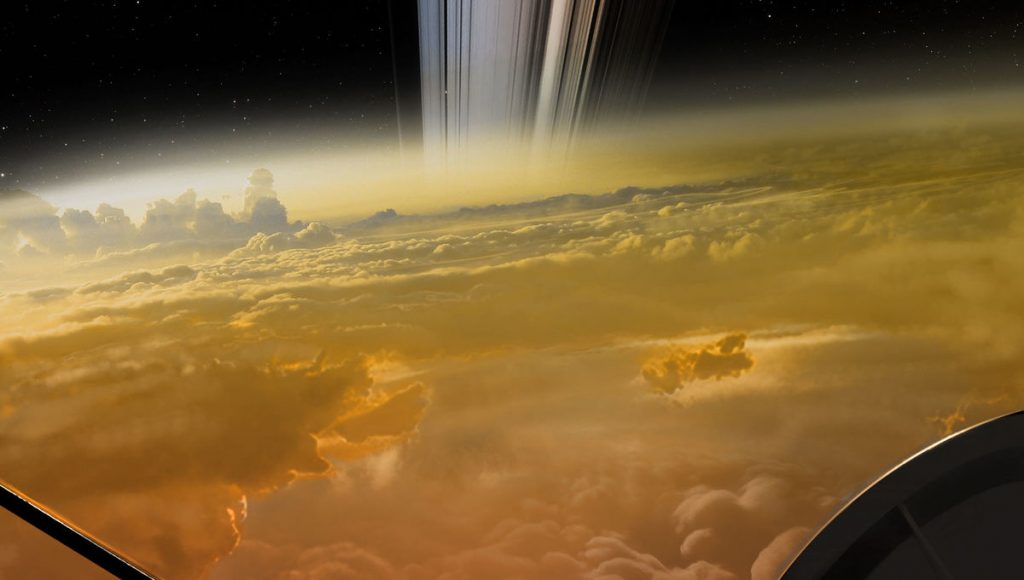
Cassini, which arrived in the Saturn system in 2004 and ended its mission in 2017 by deliberately plunging into Saturn’s atmosphere, mapped more than 620,000 square miles (1.6 million square kilometers) of liquid lakes and seas on Titan’s surface. It did the work with the radar instrument, which sent out radio waves and collected a return signal (or echo) that provided information about the terrain and the liquid bodies’ depth and composition, along with two imaging systems that could penetrate the moon’s thick atmospheric haze.

 The Sci-Fi
v.good
LikeLiked by 1 person